YONGHEE KIM · RESEARCH & TEACHING
미디어와 플랫폼의 변화,
그 안의 경제와 정책.Media and platforms.
Markets, policy, and change.
미디어·플랫폼 시장의 변화와 정책의 효과를 연구합니다.I study changing media and platform markets and the effects of policy. 데이터로 질문하고, 분석을 정책과 교육에 연결합니다.I connect data-driven analysis with policy and teaching.
선문대학교 경영학과 교수Assistant Professor, Department of Business Administration, Sun Moon University

김용희
Yonghee Kim, Ph.D.
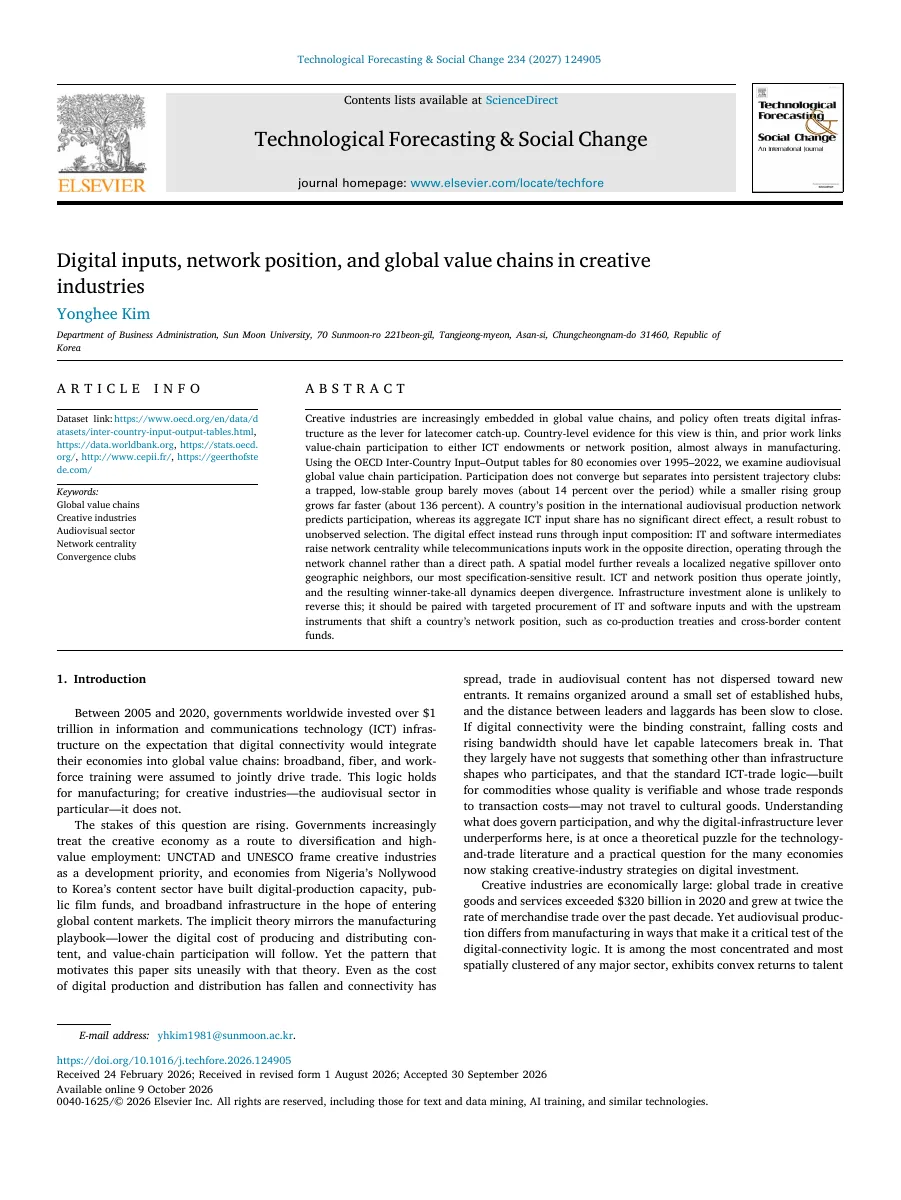
2027 · Technological Forecasting & Social Change
2026-10-09 온라인 공개 · 2027-01 권호. 표기 연도는 배정된 권호 기준입니다.Published online 2026-10-09 · January 2027 issue. The citation year follows the assigned issue.
80개 경제권의 1995~2022년 시청각 산업 자료를 분석해 글로벌 가치사슬 참여가 수렴하지 않고 서로 다른 경로 집단으로 나뉜다는 점을 보였다.Using audiovisual-sector data for 80 economies from 1995 to 2022, the study finds persistent clubs of global value-chain participation rather than convergence.
연구 내용·원문 이미지 ↗Read research & source images ↗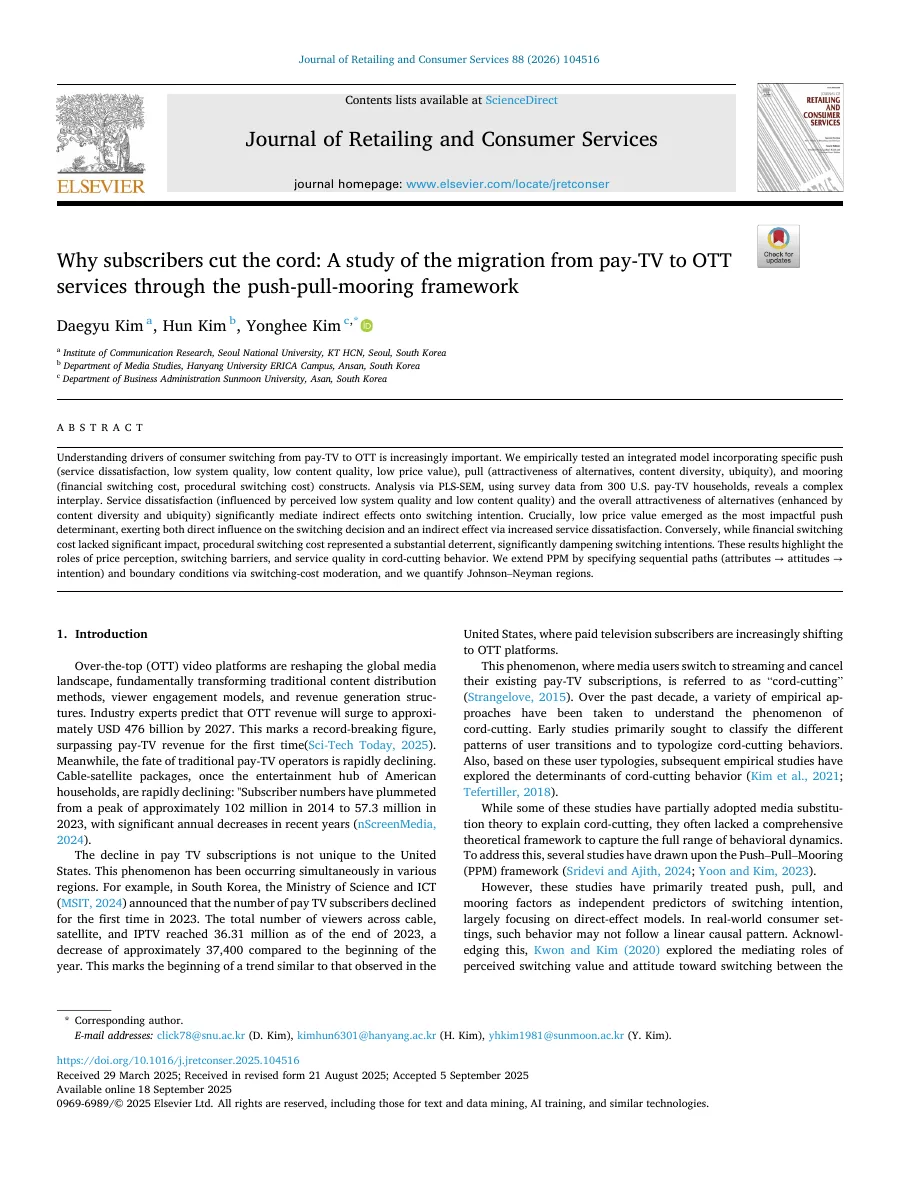
2026 · Journal of Retailing and Consumer Services
미국 유료방송 가입 가구 300곳의 설문을 PLS-SEM으로 분석해 OTT 전환의도를 설명했다.A PLS-SEM analysis of 300 U.S. pay-TV households examines intentions to switch to OTT services.
연구 내용·원문 이미지 ↗Read research & source images ↗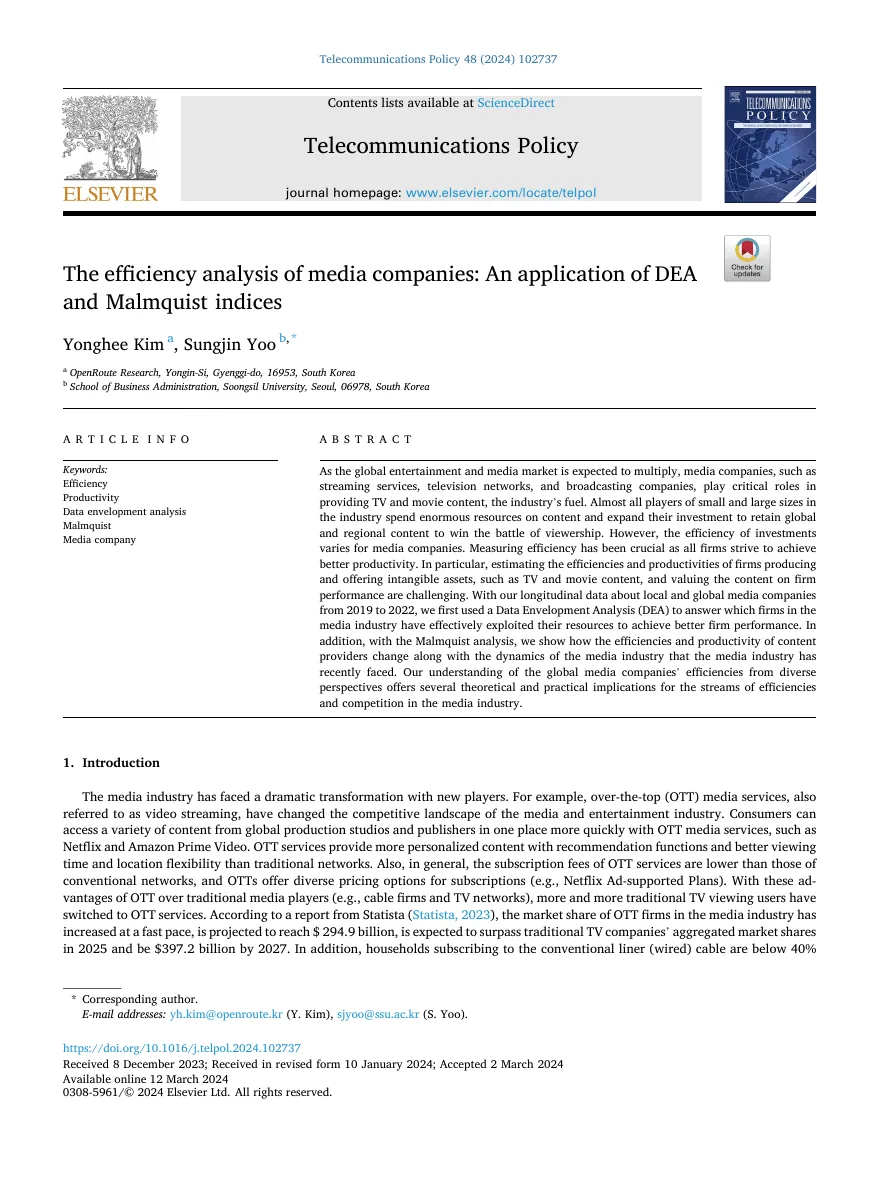
2024 · Telecommunications Policy
2019~2022년 국내외 콘텐츠 제공 기업 25곳의 자원 활용과 생산성 변화를 DEA와 Malmquist 지수로 비교했다.DEA and Malmquist indices compare resource use and productivity change among 25 local and global content providers over 2019–2022.
연구 내용·원문 이미지 ↗Read research & source images ↗Google Scholar 프로필 · 총 인용 1,335회 · h-지수 8 · i10-지수 8 · 2026-09-27 기준Google Scholar profile · 1,335 total citations · h-index 8 · i10-index 8 · as of 2026-09-27 · Google Scholar ↗