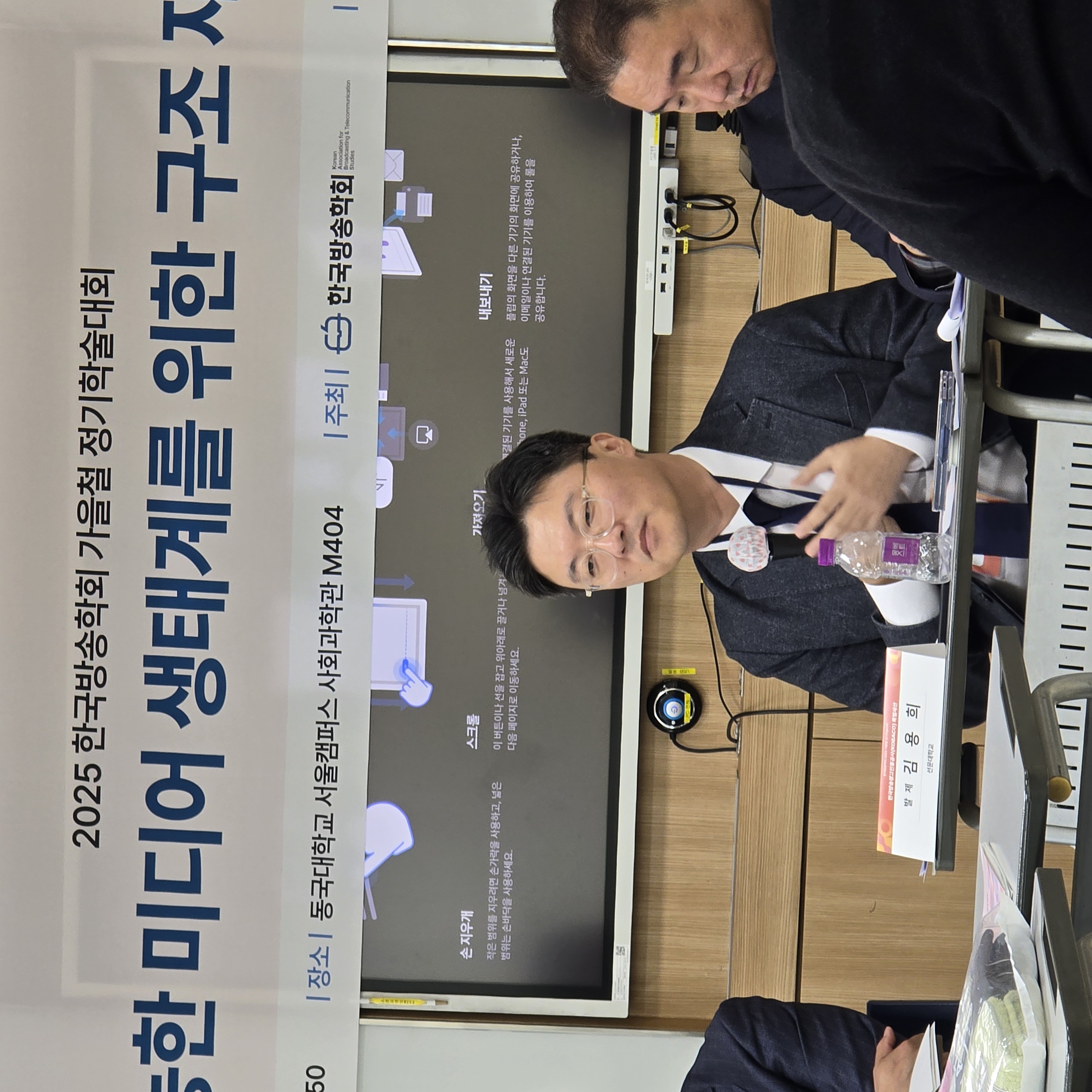
11월 8일, 한국방송학회 가을철 학술대회에 참여하여 한국 미디어 산업이 직면한 핵심 현안을 다룬 세 편의 연구를 발표했습니다. 학계 동료, 산업 현장의 실무자들과 깊이 있는 논의를 나눌 수 있었던 뜻깊은 자리였습니다.
발표에서 도출한 주요 결과와 함의를 공유합니다.
1. 지속가능한 미디어 생태계 재원 (한국방송광고진흥공사 세션)
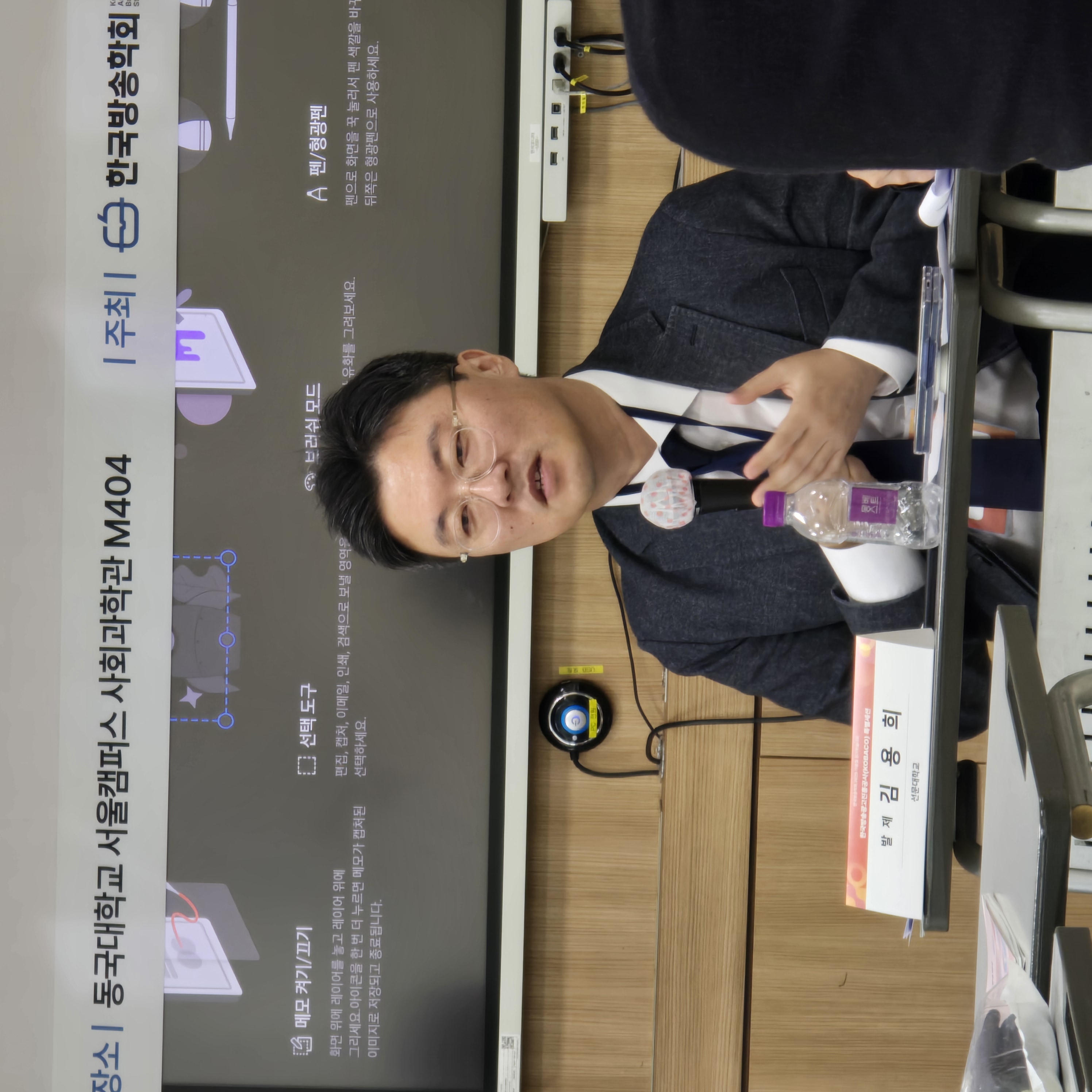
한국방송광고진흥공사(KOBACO) 세션에서는 “지속가능한 미디어 생태계를 위한 정부 재원 구조 재설계”를 주제로 발표했습니다. 지난 10년간 명목 매출은 18.9% 성장했지만, 한국 미디어 산업은 냉정한 현실에 놓여 있습니다. 실질 매출 유입은 0.1%에 머물러 사실상 정체 상태이며, 이는 전형적인 “명목 성장 착시”에 해당합니다.
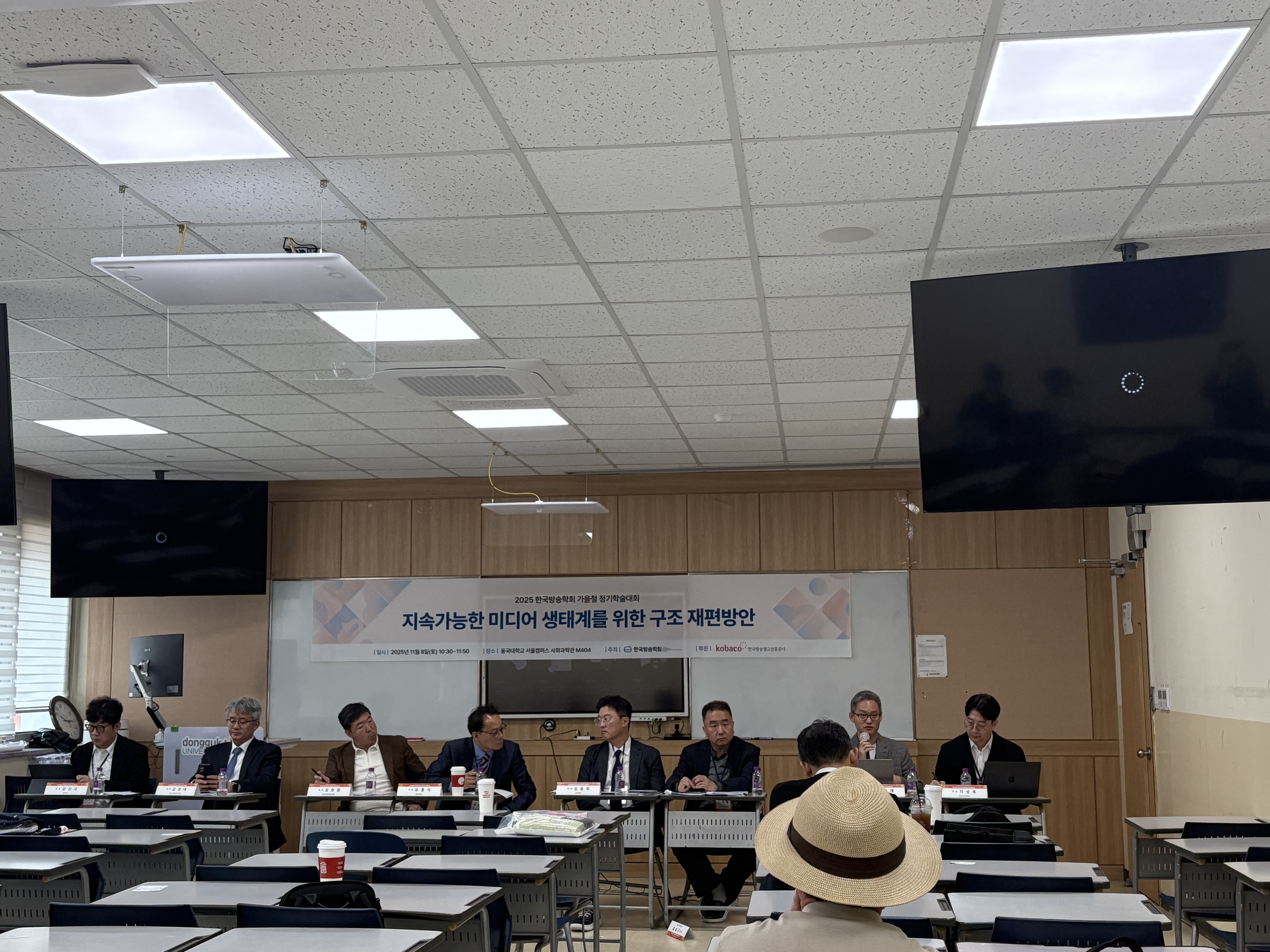
방송 광고 매출의 구조적 붕괴(-43.5%)와 44년째 동결된 공영방송 수신료는 산업의 재투자 여력을 고갈시켰습니다. 발표에서는 이러한 정책 실패가 어떻게 산업 위기를 심화시켰는지 짚고, 다음과 같은 구체적인 정책 로드맵을 제안했습니다.
- KBS 수신료 정상화
- 방송 광고 규제의 즉각적 완화
- 플랫폼 사업자의 방송통신발전기금 분담 부담 경감
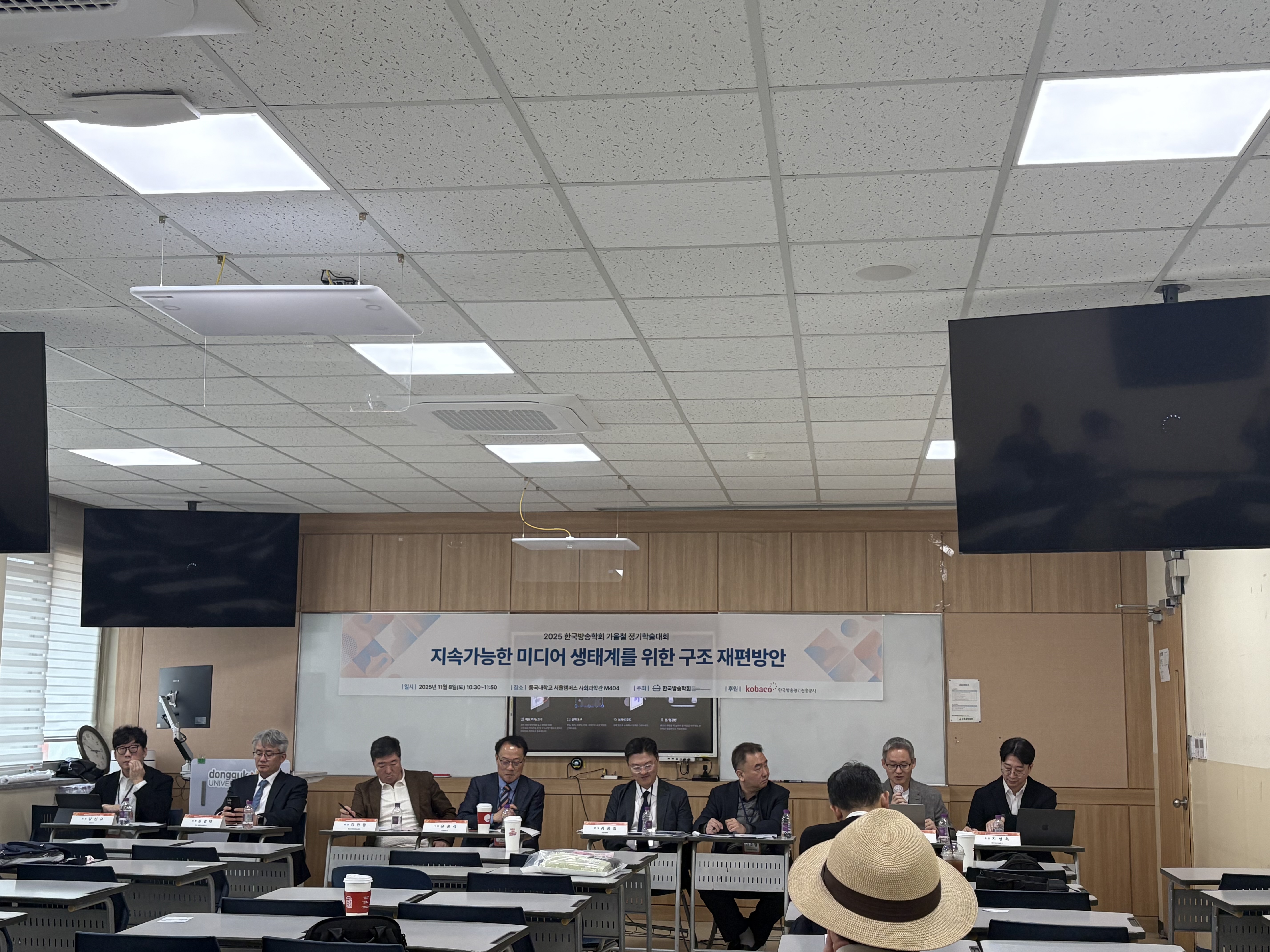
질의응답 시간은 특히 활발했습니다. 한국방송광고진흥공사 관계자와 산업계 이해관계자들이 실행 전략과 규제상의 과제에 관해 통찰력 있는 질문을 던졌습니다.
2. 한국-미국 온라인 동영상 서비스 전환 행동 분석
두 번째로 “한국-미국 시장 간 온라인 동영상 서비스 전환 행동 분석”(김대규 공저) 연구를 공유했습니다. 유료방송에서 온라인 동영상 서비스로 이동하는 소비자 전환의 작동 기제를 규명하기 위해, 푸시-풀-무어링(Push-Pull-Mooring) 틀에 구조방정식모형(SEM), 필요조건분석(NCA), 퍼지셋 질적비교분석(fsQCA), 인과 머신러닝(Causal ML) 네 가지 방법론을 결합했습니다.
핵심 결과는 다음과 같습니다. 전환 의도를 끌어내는 데 있어 “풀” 요인(대안 온라인 동영상 서비스의 매력도)이 “푸시” 요인(기존 서비스에 대한 불만)보다 4.35배 더 강력하게 작용했습니다. 고비용 구조의 미국 시장과 달리, 초저가 유료방송 요금이 고착된 한국에서는 비용(푸시)이 전환을 견인하지 못합니다. 대신 콘텐츠 매력도(풀)가 전환 행동을 좌우하는 유일한 결정 요인으로 떠올랐습니다.
3. 시간의 디지털 격차: 이용의 질적 차이
마지막으로 “시간의 디지털 격차” 연구를 통해 디지털 전환의 이면을 들여다보았습니다. 한국미디어패널(2019-2024)의 종단 자료를 분석한 결과, 1세대 디지털 격차(기기 접근성)는 소득 계층 전반에서 사실상 해소되었지만, “이용의 질”(3세대 격차)에서는 뚜렷한 차이가 지속되고 있었습니다.
저소득층은 미디어에 더 많은 총 시간을 쓰지만(“시간의 역설”), 그 시간의 88%를 오락에 할애합니다. 반면 고소득층은 미디어 이용 시간의 35%를 뉴스 소비, 정보 검색, 학습 같은 “생산적 활동”에 배분합니다. 이러한 시간 이용의 질적 격차(생산성 지수: 5.3% 대 34.5%)는 인적 자본 축적의 차이로 이어지며, 궁극적으로 새로운 사회 계층화 기제로 작동합니다.
대화와 향후 방향
세 가지 주제 모두에서 세션이 특히 활발했습니다. 학계와 산업 현장 전문가들의 날카로운 질문이 미디어 재원의 과제, 경쟁 시장의 동학, 디지털 포용에 관한 심도 있는 논의로 이어졌습니다.
이번 학술대회는 미디어 지형이 마주한 복합적이고 다층적인 과제를 다시금 확인시켜 주었고, 연구자로서의 책임감을 한층 깊게 했습니다. 빠르게 변화하는 미디어 환경에 대해 근거 기반의 실증 연구를 통해 실효성 있는 정책 대안을 제시하는 일에 계속 매진하겠습니다.
뜻깊은 자리를 만들어 주신 한국방송학회 조직위원회와 모든 참가자께 감사드립니다. 이 중요한 대화를 앞으로도 이어가기를 기대합니다.
On November 8th, I participated in the Korean Association for Broadcasting & Telecommunication Studies (KABTS) Fall Conference, where I presented three research studies addressing critical issues facing Korea’s media industry. It was a valuable opportunity to engage in substantive discussions with academic colleagues and industry practitioners.
I’d like to share the key findings and implications from my presentations.
1. Sustainable Media Ecosystem Financing (KOBACO Session)
In the KOBACO session, I presented on “Restructuring Government Financing for a Sustainable Media Ecosystem.” Despite nominal revenue growth of 18.9% over the past decade, Korea’s media industry faces a stark reality: real revenue inflow has stagnated at just 0.1%, a classic case of “nominal growth illusion.”
The structural collapse of broadcast advertising revenue (-43.5%) and the 44-year freeze on public broadcasting license fees have depleted the industry’s capacity for reinvestment. My presentation highlighted how these policy failures have intensified the industry crisis and proposed a concrete policy roadmap including:
- Normalizing KBS license fees
- Immediate deregulation of broadcast advertising restrictions
- Easing platform operators’ contributions to the Broadcasting Development Fund
The Q&A session was particularly engaging, with insightful questions from KOBACO representatives and industry stakeholders about implementation strategies and regulatory challenges.
2. Korea-US OTT Switching Behavior Analysis
Second, I shared research on “Analyzing OTT Switching Behavior Across Korea-US Markets” (co-authored with Daekyu Kim). To understand the mechanisms driving consumer migration from pay-TV to OTT, we applied the Push-Pull-Mooring framework combined with four methodologies: SEM, NCA, fsQCA, and Causal ML.
A key finding: “pull” factors (attractiveness of alternative OTT services) are 4.35 times more powerful than “push” factors (dissatisfaction with existing services) in driving switching intentions. Unlike the US market’s high-cost structure, Korea’s entrenched ultra-low-cost pay-TV pricing means that cost (push) is not a driver. Instead, content attractiveness (pull) emerges as the sole critical determinant of switching behavior.
3. Digital Inequality of Time: Quality Gaps in Usage
Finally, through my research on “Digital Inequality of Time,” I examined the underside of digital transformation. Analyzing longitudinal data from the Korea Media Panel (2019-2024), I found that while first-generation digital divides (device access) have essentially been resolved across income strata, stark differences persist in “quality of use” (third-generation divide).
Lower-income groups spend more total time on media (a “time paradox”), but dedicate 88% of that time to entertainment. In contrast, higher-income groups allocate 35% of their media time to “productive activities” such as news consumption, information search, and learning. This qualitative gap in time usage (productivity index: 5.3% vs 34.5%) translates into differences in human capital accumulation, ultimately operating as a new mechanism of social stratification.
Dialogue and Future Directions
The sessions across all three topics were particularly engaging. Sharp questions from academics and industry professionals led to in-depth discussions on media financing challenges, competitive market dynamics, and digital inclusion.
This conference reaffirmed the complex, multifaceted challenges confronting the media landscape and deepened my sense of responsibility as a researcher. I remain committed to providing practical policy alternatives for our rapidly evolving media environment through evidence-based empirical research.
My gratitude to the KABTS organizing committee and all participants for making this such a productive event. I look forward to continuing these important conversations.