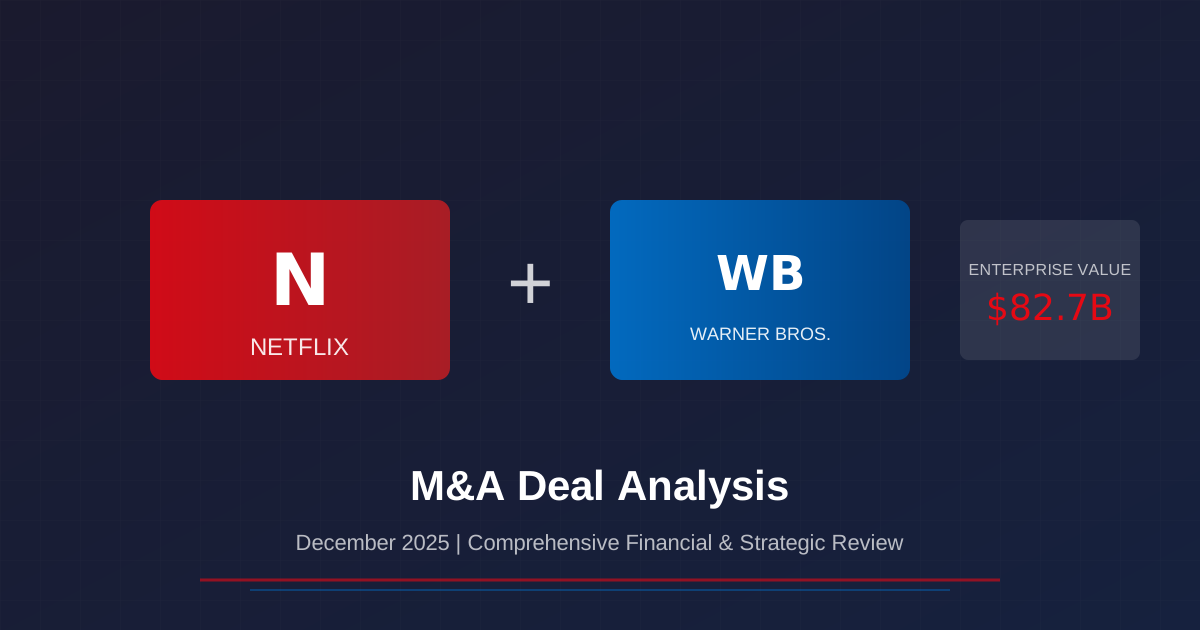
한눈에 보는 거래
넷플릭스가 워너브라더스를 인수하기로 합의했다는 어제의 발표는 엔터테인먼트 산업 통합 과정에서 분수령이 되는 사건입니다. 투자자 설명자료를 검토하고 인수합병 콘퍼런스 콜을 들은 뒤, 이 거래가 생태계 전반의 이해관계자에게 어떤 의미를 갖는지에 대한 상세 분석을 정리했습니다.
거래 구조: 자금의 흐름을 따라가다
자본 구성
자금 조달 구조는 재무적 유연성과 주주 희석 사이의 균형을 맞추려는 넷플릭스의 계산된 접근을 드러냅니다. 현금 84% 지급 방식은 기존 넷플릭스 주주에 대한 희석(약 2.9%로 추정)을 최소화하는 동시에, 워너브라더스디스커버리(WBD) 주주에게는 거래의 확실성을 제공합니다.
| 조달 원천 | 금액 | % |
|---|---|---|
| 보유 현금 | $10.3B | 12.6% |
| 신규 인수 차입 | $50.0B | 61.1% |
| 주식 발행 | $11.7B | 14.3% |
| 인수하는 워너브라더스 순부채 | $10.7B | 13.1% |
| 합계 | $82.7B | 100% |
레버리지 경고
예상 순부채/EBITDA: 거래 종결 시점 약 4.4배
이는 투자등급 신용등급에 통상 요구되는 2.5~3.0배 범위를 크게 웃도는 수준입니다. 최고재무책임자(CFO) 스펜스 노이만은 "거래 종결 후 2년 이내에 신용평가사 목표 수준 아래로 되돌리겠다"고 약속했습니다.
가치 평가 지표: 시너지에 건 베팅
두 수치 사이의 격차(EBITDA 기준 약 11배)는 이 거래에 내재된 실행 위험을 나타냅니다. 경영진의 신뢰성은 이 시너지를 실제로 실현하느냐에 달려 있습니다.
전략적 논리: 숫자 너머의 이야기
"이 자산들은 우리 사업 모델 안에서 더 가치가 있고, 우리 사업 모델은 이 자산들과 함께할 때 더 가치가 있습니다."
넷플릭스가 인수하는 것
거래 범위
Warner Bros. Television
HBO 및 HBO Max
DC Studios
게임 및 소비자 상품 부문
(Discovery Channel, HGTV,
Food Network, TLC)
세 가지 전략적 축
1. 대규모 지식재산(IP) 수익화
워너브라더스는 엔터테인먼트 역사상 가장 깊은 콘텐츠 라이브러리 가운데 하나를 보유하고 있습니다. 해리 포터, DC 유니버스, 왕좌의 게임, 프렌즈가 그 예입니다. 넷플릭스는 190개국에 걸친 2억 8,000만 명 이상의 구독자가 워너브라더스디스커버리의 현재 구조보다 이 자산에서 더 많은 가치를 끌어낼 수 있다고 봅니다. 웬즈데이 사례(아담스 패밀리 지식재산의 재활성화)는 넷플릭스의 역량을 보여 줍니다.
2. 콘텐츠 개발 역량의 격차
"워너브라더스의 개발 인프라는 100년 동안 쌓여 왔습니다. 우리는 오리지널 콘텐츠 사업을 약 10년 해 왔고, 깊은 개발 풀이라고 하기에는 우리 역량이 꽤 얕습니다." 테드 서랜도스
이는 콘텐츠 지출에서의 우위에도 불구하고 넷플릭스 내부의 한계를 인정한 주목할 만한 발언입니다.
3. 시청 몰입도 가속
HBO Max의 약 1억 명 구독자와 워너의 콘텐츠 라이브러리를 더하면 시청 몰입도 지표가 즉각적으로 끌어올려집니다. 넷플릭스는 이 거래가 시청 몰입도 둔화에 대한 대응이 아니라고 강조했지만, 최근 시청 시간 성장에 관한 의문이 제기되던 시점을 고려하면 그 타이밍은 눈여겨볼 만합니다.
운영 전략: 통합보다 보존
| 사업 부문 | 전략 | 근거 |
|---|---|---|
| HBO Max | 별도 서비스로 유지 | 구독자 중복이 높아 이미 양쪽을 모두 결제 중. 묶음 상품 가능성 열어 둠 |
| 극장 개봉 | 워너의 개봉 창구 전략 유지 | 넷플릭스가 극장 사업 모델을 그대로 승계. 해체하지 않음 |
| 워너브라더스 텔레비전 | 제3자 대상 제작 지속 | 외부 고객 매출이 가치 있음. 기존 넷플릭스 스튜디오 모델과 다른 방향 |
"HBO Max 구독자 가운데 넷플릭스 구독자이기도 한 사람의 수는 상당히 많습니다. 그리고 그들은 자신이 누리는 엔터테인먼트의 가치만큼 별도의 적정 금액을 지불하고 있습니다."
시너지 분석: 25억 달러는 어디서 나오는가
| 항목 | 추정 비중 | 설명 |
|---|---|---|
| 판매관리비(SG&A) 절감 | ~60% | 본사 간접비, 관리 기능, 중복 인력 |
| 기술 통합 | ~25% | 스트리밍 플랫폼 통합, 인프라 효율화 |
| 콘텐츠 효율화 | ~15% | 중복 개발 제거, 편성 조율 |
시너지 실현 일정
| 연차 | 추정 시너지 | 단계 |
|---|---|---|
| 1년차 | $5-8B | 조직 통합, 일회성 비용으로 일부 상쇄 |
| 2년차 | $15-20B | 운영 시너지 가속. 주당순이익(EPS) 증가 기여 |
| 3년차 | $25-30B | 연환산 시너지 완전 달성 |
실행 위험: 인수합병 역사의 문제
미디어 인수합병은 시너지 실현에서 순탄치 않은 역사를 갖고 있습니다. AT&T-타임워너, AOL-타임워너를 비롯한 수많은 거래가 약속한 효율을 끝내 만들어 내지 못했습니다.
그렉 피터스는 이렇게 답했습니다. "과거의 실패 상당수는 인수 주체가 엔터테인먼트 사업을 이해하지 못했기 때문입니다. 우리는 이 자산들을 이해하고 있습니다."
산업적 함의: 새로운 스트리밍 지형
떠오르는 3강 구도
규모를 갖춘 수직 통합형 글로벌 사업자
| 등급 | 사업자 | 핵심 자산 |
|---|---|---|
| 1 | 넷플릭스 + 워너브라더스 | 구독자 3억 8,000만 명 이상, 가장 깊은 라이브러리, HBO 브랜드 |
| 2 | 디즈니 (Disney+, Hulu, ESPN) | 프랜차이즈 지식재산 우위, 스포츠 중계권 |
| 3 | 아마존 (Prime Video, MGM) | 전자상거래 연계, 무한에 가까운 자본력 |
중위권 플랫폼(Paramount+, Peacock, 소규모 지역 사업자)은 점점 더 큰 전략적 압박에 직면합니다. 콘텐츠 비용은 계속 오르는 반면 구독자 성장은 더 어려워집니다. 추가 통합은 불가피해 보입니다.
비판적 평가: 잘될 수 있는 것과 잘못될 수 있는 것
지식재산 잠재력 발굴: 워너 카탈로그 전반에 걸친 웬즈데이 방식의 재활성화
기술 활용: 넷플릭스 알고리즘이 HBO Max의 콘텐츠 발견을 강화
글로벌 유통: 워너 콘텐츠가 190개국 네트워크를 확보
개발 가속: 워너의 깊은 파이프라인에 대한 접근
문화적 통합: 할리우드와 실리콘밸리의 충돌
시너지 실행: 25억 달러 목표는 완벽한 실행을 요구
재무 부담: 4.4배 레버리지는 오차 여유가 거의 없음
규제 변수: 규모가 커질수록 더 강한 심사를 부를 수 있음
결론: 스트리밍 전쟁이 종반전에 들어서다
넷플릭스의 워너브라더스 인수는 디즈니의 21세기폭스 인수 이후 가장 중대한 미디어 거래입니다. 전략적 논리는 일관됩니다. 넷플릭스는 지식재산, 개발 역량, 그리고 상호 보완적인 스트리밍 서비스를 얻고, 워너브라더스의 자산은 넷플릭스의 글로벌 유통망과 기술 인프라에 대한 접근권을 얻습니다.
재무 구조는 공격적이지만 시너지가 실현된다면 감당 가능한 수준입니다. 시너지 반영 전 25.2배 배수는 실행을 요구하고, 반영 후 14.3배 배수는 실행을 보상합니다. 경영진의 신뢰성은 3년에 걸친 통합 기간 동안 시험대에 오를 것입니다.
핵심 결론
지금으로서는 넷플릭스가 베팅을 마쳤습니다. 이제 실행이 시작됩니다.
본 분석은 2025년 12월 5일자 넷플릭스 인수합병 콘퍼런스 콜 녹취록과 투자자 설명자료를 바탕으로 합니다.
The Deal at a Glance
Yesterday’s announcement of Netflix’s agreement to acquire Warner Bros. marks a watershed moment in entertainment industry consolidation. After reviewing the investor presentation and listening to the M&A conference call, here’s my detailed analysis of what this transaction means for stakeholders across the ecosystem.
Deal Structure: Following the Money
Capital Stack
The funding structure reveals Netflix’s calculated approach to balancing financial flexibility with shareholder dilution. The 84% cash consideration minimizes dilution to existing Netflix shareholders (estimated at approximately 2.9%) while providing WBD shareholders with transaction certainty.
| Source | Amount | % |
|---|---|---|
| Cash on Hand | $10.3B | 12.6% |
| New Acquisition Debt | $50.0B | 61.1% |
| Equity Issuance | $11.7B | 14.3% |
| WB Net Debt Assumed | $10.7B | 13.1% |
| Total | $82.7B | 100% |
Leverage Warning
Pro forma Net Debt/EBITDA: ~4.4x at closing
This is well above the 2.5-3.0x range typically required for investment-grade ratings. CFO Spence Neumann committed to "bring that back under rating agency targets within 2 years after closing."
Valuation Metrics: The Synergy Bet
The gap between these two figures, nearly 11 turns of EBITDA, represents the execution risk embedded in this transaction. Management’s credibility hinges on delivering these synergies.
Strategic Rationale: Beyond the Numbers
"These assets are more valuable in our business model, and our business model is more valuable with these assets."
What Netflix Is Acquiring
Transaction Scope
Warner Bros. Television
HBO & HBO Max
DC Studios
Games & Consumer Products
(Discovery Channel, HGTV,
Food Network, TLC)
Three Strategic Pillars
1. IP Monetization at Scale
Warner Bros. possesses one of the deepest content libraries in entertainment history: Harry Potter, DC Universe, Game of Thrones, Friends. Netflix believes its 280M+ subscribers across 190 countries can extract more value from these assets than WBD's current structure allows. The Wednesday case study (Addams Family IP revitalization) demonstrates Netflix's capability.
2. Development Capability Gap
"The development infrastructure of Warner Bros. has been building for 100 years. We have been in the original content business for about a decade... our deep development pool is quite shallow." Ted Sarandos
This is a remarkable acknowledgment of Netflix's internal limitations despite content spending dominance.
3. Engagement Acceleration
Adding HBO Max's ~100 million subscribers and Warner's content library provides an immediate boost to engagement metrics. While Netflix emphasized this isn't a response to engagement challenges, the timing is notable given recent questions about viewing hour growth.
Operational Strategy: Preservation Over Integration
| Business Unit | Strategy | Rationale |
|---|---|---|
| HBO Max | Maintain as separate service | High subscriber overlap already paying for both; bundling options open |
| Theatrical | Continue Warner's window strategy | Netflix inherits theatrical business model; won't dismantle |
| WB Television | Continue third-party production | Revenue from external clients valuable; departs from Netflix Studios model |
"HBO Max subscribers who are also Netflix subscribers... that number is quite large. And they are paying a nice discrete amount for the value of entertainment they're getting."
Synergy Analysis: Where the $2.5 Billion Comes From
| Category | Est. % | Description |
|---|---|---|
| SG&A Reduction | ~60% | Corporate overhead, administrative functions, redundant headcount |
| Technology Integration | ~25% | Streaming platform consolidation, infrastructure rationalization |
| Content Efficiency | ~15% | Elimination of duplicative development, coordinated programming |
Realization Timeline
| Year | Est. Synergies | Phase |
|---|---|---|
| Year 1 | $5-8B | Organizational integration, offset by one-time costs |
| Year 2 | $15-20B | Accelerating operational synergies; EPS accretive |
| Year 3 | $25-30B | Full run-rate achieved |
Execution Risk: The M&A History Problem
Media M&A has a troubled history with synergy realization. AT&T-Time Warner, AOL-Time Warner, and numerous other transactions failed to deliver promised efficiencies.
Greg Peters addressed this: "A lot of the failures we've seen historically is because the company doing the acquisition didn't understand the entertainment business... We understand these assets."
Industry Implications: The New Streaming Landscape
The Emerging Triopoly
Scaled, Vertically Integrated Global Players
| Tier | Player | Key Assets |
|---|---|---|
| 1 | Netflix + Warner Bros. | 380M+ subscribers, deepest library, HBO brand |
| 2 | Disney (Disney+, Hulu, ESPN) | Franchise IP dominance, sports rights |
| 3 | Amazon (Prime Video, MGM) | E-commerce integration, unlimited capital |
Mid-tier platforms (Paramount+, Peacock, smaller regionals) face increasing strategic pressure. Content costs continue rising while subscriber growth becomes more difficult. Further consolidation appears inevitable.
Critical Assessment: What Could Go Right vs. Wrong
IP unlocking: Wednesday-style revitalization across Warner catalog
Technology leverage: Netflix algorithms enhance HBO Max discovery
Global distribution: Warner content gains 190-country footprint
Development acceleration: Access to Warner's deep pipeline
Cultural integration: Hollywood vs. Silicon Valley clash
Synergy execution: $2.5B target requires flawless execution
Balance sheet strain: 4.4x leverage leaves minimal room for error
Regulatory surprises: Scale may invite more scrutiny
Conclusion: The Streaming Wars Enter Endgame
Netflix’s acquisition of Warner Bros. represents the most consequential media transaction since Disney’s acquisition of 21st Century Fox. The strategic logic is coherent: Netflix gains IP, development capability, and a complementary streaming service; Warner Bros. assets gain access to Netflix’s global distribution and technology infrastructure.
The financial structure is aggressive but manageable if synergies materialize. The 25.2x pre-synergy multiple demands execution; the 14.3x post-synergy multiple rewards it. Management’s credibility will be tested over the three-year integration period.
The Bottom Line
For now, Netflix has made its bet. The execution begins.
Analysis based on Netflix's M&A conference call transcript and investor presentation dated December 5, 2025.