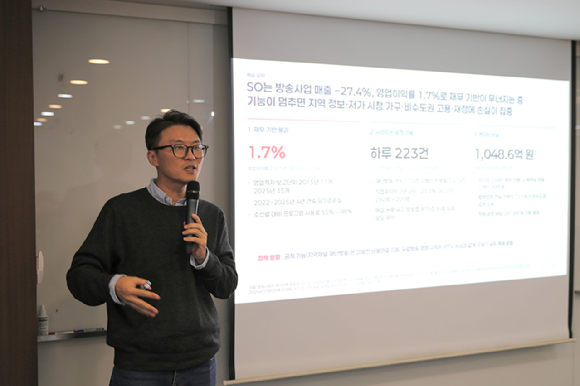
우리 동네에 재난이 닥치거나 지방선거가 열릴 때, 누가 시·군·구 소식을 꾸준히 취재해 전할까요? 11월 17일 서울 서대문구 충정타워빌딩에서 열린 ‘SO가 무너지면 지역은 무엇을 잃는가’ 스터디에서 케이블TV 사업자(SO)의 경영난을 주민의 입장에서 살펴봤습니다.
지역뉴스와 월 4,400원짜리 방송
발표에서 소개한 자료를 보면 전국 78개 권역의 케이블 지역채널이 제작하는 지역뉴스는 하루 평균 223건입니다. 취재 인력이 줄면 오랫동안 지켜본 지역 현안을 후속 보도하거나 동네의 변화를 영상으로 남기는 일부터 어려워집니다.
시청료도 문제입니다. 2024년에는 별도 셋톱박스 없이 케이블 방송을 보는 방식인 8VSB 가입이 약 559만 건이었습니다. 전체 SO 방송 가입 건수의 45.9%입니다. 월 4,400원 안팎의 상품을 쓰던 가구라면 다른 서비스로 옮길 때 같은 가격으로 방송을 계속 볼 수 있을지가 중요합니다.
지역채널 운영비는 누가 부담하나
케이블 사업자가 수신료로 100원을 걷었을 때 프로그램 사용료로 나가는 몫은 2015년 55원에서 2025년 88원으로 커졌습니다. 같은 기간 영업이익률은 12.5%에서 1.7%로 떨어졌습니다. 지역채널을 유지할 의무가 있는 사업자에게 현장에서 쓸 돈이 얼마나 남는지 함께 살펴야 합니다.
발표에서는 사업자의 경영 사정에 따라 방송통신발전기금을 감면하고, 지역뉴스와 재난방송 제작에 드는 비용을 지원하자고 제안했습니다. 프로그램 사용료를 두고 갈등이 생기기 전부터 거래 자료를 꾸준히 모아 양측의 협상을 도울 상설기구도 제안했습니다.
발표 현장은 지디넷코리아 홍지후 기자가 2026년 11월 18일 보도했습니다. 기사 원문과 현장 사진
Who will keep reporting on a city or county when a disaster strikes or a local election takes place? At a study session in Seoul’s Seodaemun district on November 17, I discussed what financial pressure on cable TV operators could mean for the people who watch them.
Local news and a monthly TV bill of 4,400 won
According to the figures I presented, cable channels across 78 service areas produce an average of 223 local news stories a day. When a newsroom loses reporters, a community can also lose years of local knowledge and a continuing video record of local affairs.
In 2024, about 5.59 million cable subscriptions used 8VSB, which allows viewers to watch without a separate set-top box. That was 45.9% of all cable TV subscriptions. For a household paying around 4,400 won a month, switching providers raises a practical question. Can it still watch TV for the same price?
Paying for local coverage
For every 100 won cable operators collected in subscription fees, they paid 55 won for programming in 2015 and 88 won in 2025. Over the same period, their operating margin fell from 12.5% to 1.7%. Operators still have to run local channels. How much money is left to pay the people who produce them?
I proposed reducing contributions to Korea’s Broadcasting and Communications Development Fund to reflect operators’ financial circumstances and helping cover the cost of local news and emergency broadcasts. I also proposed a standing body to collect market data so operators and programmers have evidence to draw on when negotiating fees, before a dispute arises.
Hong Ji-hu covered the session for ZDNet Korea on November 18, 2026. Read the original report and see the photograph (in Korean)