통합미디어법을 미디어 경영의 관점에서 읽었습니다
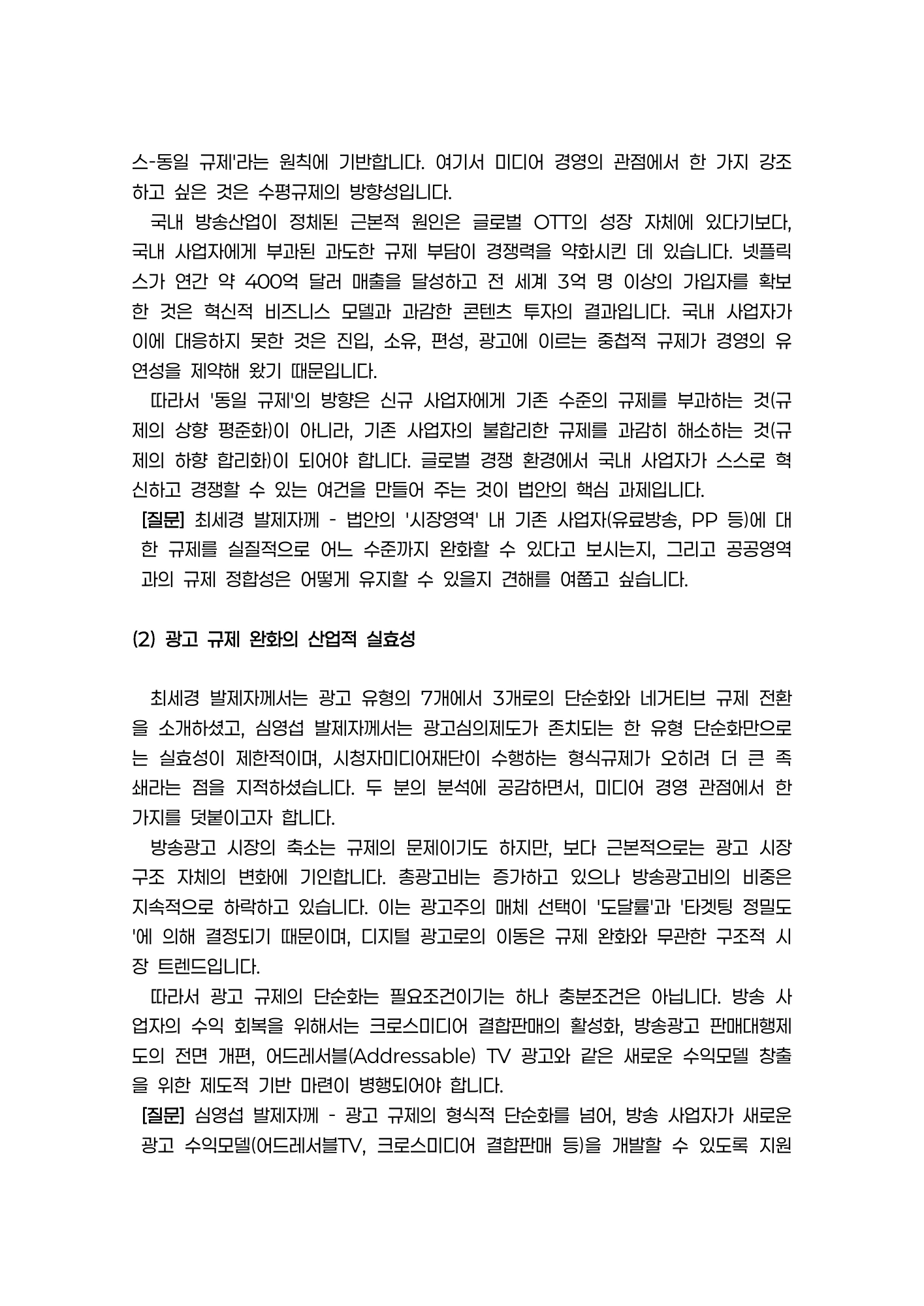
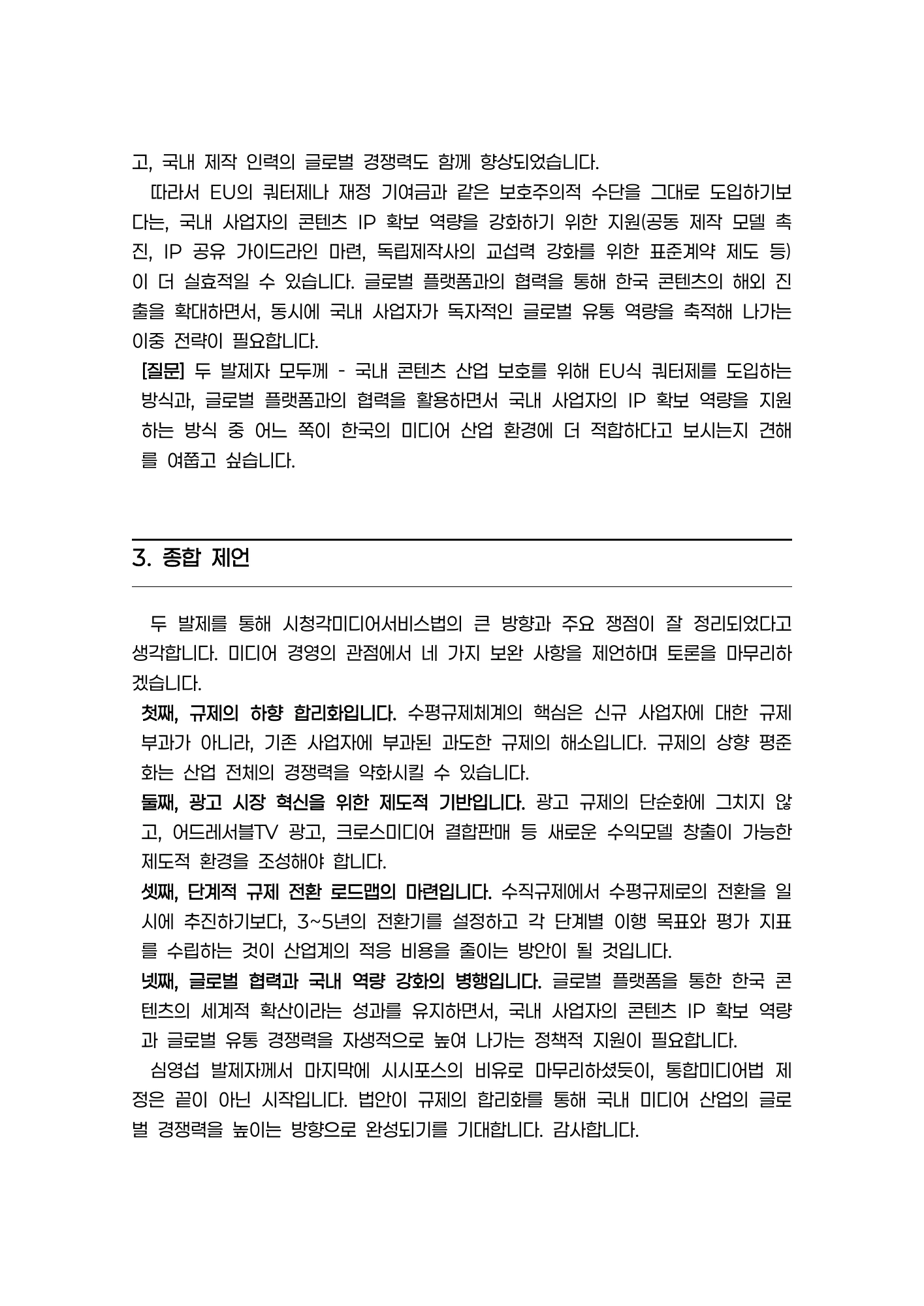
2026년 3월 26일 정동1928 컨퍼런스룸에서 열린 한국미디어경영학회 특별세미나에 토론자로 참여했습니다. 심영섭 교수의 경쟁구조 발제와 최세경 연구위원의 정책 변화·과제 발제에 대해, 법제의 전환이 실제 사업자의 경영과 시장에 어떤 조건을 만들지 네 쟁점으로 의견을 제시했습니다.
1. 수평규제의 방향: 기존 규제의 합리화
‘동일 서비스·동일 규제’를 적용할 때 어느 수준을 기준으로 삼을지가 중요하다고 봤습니다. 기존 사업자의 진입·소유·편성·광고 규제가 경영의 유연성을 얼마나 제약하는지 점검하고, 통합 논의에서 그 부담을 실질적으로 합리화해야 한다는 입장입니다.
발제자에게는 시장영역에 속한 유료방송·PP 규제를 어느 범위까지 완화할 수 있는지, 공공영역의 책무와 정합성은 어떻게 유지할지 질문했습니다. 이는 당시 토론에서 제시한 정책적 판단이며 특정 규제의 인과효과를 새로 추정한 결과는 아닙니다.
2. 광고 유형 단순화와 수익모델 혁신을 연결
광고 유형을 정리하는 일만으로 방송광고의 수익이 회복되는지 물었습니다. 광고주가 도달률과 타기팅을 기준으로 매체를 선택하는 시장 변화 속에서, 사업자가 새로운 상품과 판매 방식을 개발할 여건도 함께 필요합니다.
구체적으로 크로스미디어 결합판매, 광고 판매대행 구조의 개편, 어드레서블 TV 광고를 검토할 과제로 제시했습니다. 질문은 광고 규제의 형식적 단순화를 넘어 이런 수익모델을 가능하게 하는 제도적 기반이 통합미디어법 논의에 포함돼야 하는가였습니다.
3. FAST와 디바이스 플랫폼: 규제 비용과 관문 기능을 구분
설비를 갖춘 유료방송과 디바이스 기반 영상 플랫폼의 서로 다른 비용 구조도 짚었습니다. 새로운 플랫폼을 포섭하는 과정에서 기존 허가·요금승인·운영 의무의 적정성도 함께 검토해야 한다는 입장이었습니다.
동시에 스마트TV 제조사와 운영체제가 콘텐츠 유통의 관문이 되는 문제는 별도의 경쟁정책 쟁점입니다. 토론에서는 이런 게이트키퍼 문제를 시청각미디어서비스법 안에서 다룰지, 디지털시장·공정경쟁 체계와 연계할지 발제자에게 질문했습니다. 사업자의 규제 비용과 시장 지배력은 서로 다른 판단을 필요로 하기 때문입니다.
4. 콘텐츠 경쟁력: IP와 유통 역량을 축적하는 지원
국내 콘텐츠의 경쟁력을 높이는 과제로 공동제작 모델, IP 공유 가이드라인, 독립제작사의 교섭력을 뒷받침하는 표준계약, 독자적인 해외 유통 역량을 제안했습니다. 국제 협력을 활용하면서 국내 사업자가 권리와 역량을 축적하도록 정책을 설계하자는 방향입니다.
발제자들에게는 쿼터와 재정 기여 같은 수단과 IP 확보·활용 역량을 지원하는 방식이 한국의 산업 환경에서 각각 어떤 효과와 비용을 갖는지 비교할 필요가 있다고 질문했습니다. 단일한 보호 수단만으로 제작·유통의 문제를 모두 해결할 수 있는지 검토하자는 취지였습니다.
단계적 전환과 평가 지표
종합 제언에서는 3~5년의 전환기를 두고 단계별 이행 목표와 평가 지표를 설계하는 방안을 제시했습니다. 통합 법제를 만드는 일은 제도의 시작이며, 사업자와 이용자가 겪는 변화와 적응 비용을 확인하면서 조정해야 한다는 관점입니다.
| 토론의 축 | 현장에서 확인할 질문 |
|---|---|
| 규제 합리화 | 기존 사업자의 부담이 어떤 항목에서 얼마나 달라지는가 |
| 광고 혁신 | 새로운 상품·판매·타기팅 방식이 실제로 가능한가 |
| 경쟁 질서 | 플랫폼의 관문 기능과 공정경쟁 문제를 어느 체계가 다루는가 |
| 콘텐츠 역량 | 권리 확보와 활용, 협상과 해외 유통의 역량이 축적되는가 |
당시 공식 프로그램

이 글은 당시 4쪽 토론문의 쟁점과 질문을 풀어 쓴 기록입니다. 발제자나 다른 토론자의 답변을 대신 작성하지 않았습니다.
A media-management perspective on integrated legislation
At the KMMA special seminar on 26 March 2026, I discussed presentations on competition and audiovisual media policy through four questions about how legal change affects firms and markets.
1. The direction of horizontal regulation
“Same service, same regulation” requires choosing a baseline. I argued for examining how existing entry, ownership, programming and advertising rules restrict flexibility, and for rationalizing those burdens. I asked how far pay-TV and channel-provider rules could change while maintaining coherence with public-service obligations. This records a policy position, not a new causal estimate of regulation.
2. Connect simpler advertising rules with business-model innovation
Simplifying advertising categories alone does not establish revenue recovery. Audience reach and targeting influence advertiser choices, so firms also need room to develop products and sales arrangements. I raised cross-media bundled sales, changes in advertising-sales intermediation and addressable TV advertising, asking whether the institutional basis for these models belongs in the integrated-law discussion.
3. Separate regulatory costs from device-platform gatekeeping
Infrastructure-based pay-TV and device-based video services face different cost structures. Bringing new platforms into scope should prompt a review of existing licensing, tariff approval and operational obligations as well.
Hardware and operating systems may also become gateways to content distribution. I asked whether that competition issue belongs within audiovisual legislation or should be coordinated with digital-market and competition frameworks. Regulatory cost and market power require related but distinct assessments.
4. Strengthen content rights and distribution capabilities
The discussion proposed co-production models, IP-sharing guidance, standard contracts supporting independent producers’ bargaining position and international distribution capabilities. Cooperation abroad and the accumulation of domestic rights and capabilities can develop together.
I asked the presenters to compare the effects and costs of quotas or financial contributions with support for acquiring and using IP, within Korea’s industry conditions.
A phased transition and measurable outcomes
The concluding proposal considered a three-to-five-year transition, with stages and evaluation indicators that make adjustment costs visible.
| Discussion axis | Practical evaluation question |
|---|---|
| Rationalizing regulation | Which existing burdens change, and by how much? |
| Advertising innovation | Can firms implement new products, sales and targeting? |
| Competition | Which framework addresses gatekeeping and fair competition? |
| Content capabilities | Are rights, bargaining and distribution capabilities accumulating? |
Official programme
This account follows the four-page discussion paper and its questions. It does not reconstruct other speakers’ answers.