Does Big Data Matter to Value Creation?: 오라클(Oracle) 솔루션을 중심으로Does Big Data Matter to Value Creation? The Case of Oracle Solutions
Original title: Does Big Data Matter to Value Creation?: 오라클(Oracle) 솔루션을 중심으로
번역 제목은 이 사이트의 편집 번역입니다. 서지와 인용에는 원문 제목을 사용합니다.Translated titles are editorial translations for this site. Bibliographic records and citations retain the original title.
저자 표시: Author notes: 굵은 글씨: 김용희Bold: Yonghee Kim 교신저자Corresponding author
한국IT서비스학회지, 11(3), 39–48색인: Indexed in: KCI
요약Summary
빅데이터의 개념과 발전을 정리하고 기업 활용 사례 및 오라클의 데이터 관리·분석 솔루션을 검토했다. 정제된 정보가 의사결정과 고객관계·가치 창출에 활용될 수 있는 경로를 사례 중심으로 제시했다.
The paper reviews the concept and development of big data, business applications, and Oracle’s data-management and analytics solutions. Cases illustrate how refined information can support decision-making, customer relationships, and value creation.
한눈에 보기At a glance
- 방법Methods
- Literature Review
- Business Case Analysis
원문을 바탕으로 연구의 논리와 결과를 풀어쓴 해설입니다. 수치는 표시한 표와 쪽을 기준으로 읽습니다. 아래 표는 핵심 항목을 웹에서 읽도록 재구성했고, 원문 표·그림이 있는 페이지를 함께 제공합니다.This reading guide explains the paper’s reasoning and findings in new wording. Tables below re-present selected source results for web reading, alongside images of the relevant original pages.
연구 질문과 배경Question and context
기업이 많은 데이터를 쌓는 것과 그 데이터로 가치를 만드는 것은 어떻게 다를까. 이 논문은 빅데이터를 새로운 유행어가 아니라 기존 도구로 처리하기 어려워진 데이터와 의사결정 체계의 문제로 설명한다. 2012년의 기술·경영 환경을 배경으로, 오라클의 저장·통합·분석 솔루션과 기업 활용 사례를 통해 수집된 데이터가 경영 행동으로 이어지는 경로를 논의한다. 핵심 질문은 데이터의 양 자체가 아니라 조직이 어떤 정보를 어떤 업무 결정에 연결할 수 있는가이다.
What distinguishes accumulating data from creating value with it? This 2012 paper frames big data as a challenge of processing and decision support rather than simply a fashionable label. It reviews Oracle’s storage, integration and analytics approach alongside business cases. The central question is how an organisation turns heterogeneous data into usable information and action, not whether a large dataset automatically produces business value.
PDF 파일 2, 3, 8, 9쪽PDF pages 2, 3, 8, 9
자료와 변수Data and variables
기업을 대상으로 새 설문이나 실험 표본을 만든 연구는 아니다. 빅데이터 관련 보고서·백서, 산업별 활용 논의와 Google Flu Trends·Dell·Volvo 사례를 자료로 사용한다. 데이터의 규모·속도·다양성이라는 3V와 경제적 가치, 기존 데이터베이스와 새 데이터의 결합을 주요 개념으로 정리한다. 따라서 사례에 등장하는 만족도나 결함 탐지 수치는 연구진이 동일한 표본과 방법으로 새로 측정한 결과와 구분해야 한다. 현재 서비스의 성능을 확인하는 자료도 아니다.
The evidence is literature, white papers, industry applications and examples involving Google Flu Trends, Dell and Volvo; there is no newly recruited survey or experimental sample. Volume, velocity, variety, economic value and integration with existing databases organise the discussion. Quantities mentioned in business cases are secondary claims from the cited sources, not outcomes newly measured under a common design or evidence of current product performance.
PDF 파일 3, 4, 5, 6, 7쪽PDF pages 3, 4, 5, 6, 7
방법을 쉽게 읽기How the method works
방법은 개념 검토와 사례를 연결한 분석이다. 먼저 전통적 분석과 빅데이터 분석의 차이를 정리하고, 데이터 수집→구조화·관리→기존 업무 데이터와 연계→분석·전달이라는 흐름에 기술을 배치한다. 쉬운 설명으로는 원유가 많아도 정제·유통 체계가 없으면 쓸 수 없듯이 데이터에도 처리 과정이 필요하다는 논리다. 회귀분석으로 투자 수익을 추정하거나 오라클과 경쟁사 제품의 성능을 비교하는 벤치마크 실험을 수행한 논문은 아니다.
The method is conceptual review and case-based synthesis. It contrasts established analysis with emerging big-data practices and places technologies along a collection, preparation, integration, analysis and delivery workflow. An accessible analogy is that abundant raw material is useful only with refining and distribution capabilities. The paper does not estimate investment returns through regression or run comparative performance benchmarks against competing products.
PDF 파일 3, 4, 7, 8쪽PDF pages 3, 4, 7, 8
주요 결과와 수치의 의미Findings and their meaning
주요 결과는 효과크기보다 가치 창출의 구성요소를 정리한 데 있다. 원문은 Big Data Appliance의 수집·구조화, 기존 Oracle DB·Exadata와의 연계, Connector·Advanced Analytics를 통한 분석, Exalytics를 통한 적시 활용을 하나의 체계로 제시한다. 결론은 고객 접점 정보, 업무 프로세스 개선, 정보 분석 조직과 내부 엔지니어링 역량을 함께 강조한다. 이 해설은 원문에 인용된 기업 성공 수치를 새로운 검증 결과로 재포장하지 않고 단계별 역할을 비교표로 정리한다.
The main output is a structured account of value creation, not an estimated effect size. The source links Big Data Appliance collection and preparation, Oracle DB/Exadata integration, connectors and advanced analytics, and timely analytical delivery. Its conclusion also stresses customer-contact information, process improvement and internal engineering capability. The accompanying table reconstructs these functional stages rather than presenting cited corporate success numbers as newly validated research findings.
PDF 파일 5, 7, 8, 9쪽PDF pages 5, 7, 8, 9
핵심 결과를 표로 읽기Read the key results in tables
| 단계Stage | 원문에서 다룬 기능Function discussed in the paper | 경영적 질문Managerial question |
|---|---|---|
| 수집Collection | SNS·스마트기기 접점SNS and smart-device contact | 무슨 정보를 왜 모으는가What should be collected, and why? |
| 구조화·관리Preparation | Big Data Appliance | 새 데이터를 어떻게 정리하는가How are new data prepared? |
| 통합Integration | 기존 DB·Exadata 연계Existing DB and Exadata | 업무 데이터와 어떻게 연결하는가How are operational data linked? |
| 분석·전달Analysis and delivery | Connector·Advanced Analytics·Exalytics | 누가 결과로 무엇을 결정하는가Who acts on the results? |
2012년 원문의 기능적 논의를 해설용으로 재구성한 표다. 제품의 현재 사양·성능 비교나 도입 효과 추정치가 아니다.An explanatory reconstruction of the 2012 functional discussion, not current specifications, performance benchmarks or adoption-effect estimates.
원문4절과 그림2의 논의를 재구성, PDF7~8쪽Reconstructed from section 4 and Figure 2, PDF pp.7–8 · PDF 파일 7, 8쪽PDF pages 7, 8
원문의 핵심 표·그래프Key tables & figures in the source
표·그림이 수록된 원문 페이지입니다. 이미지를 누르면 확대할 수 있습니다.Original pages containing the selected tables or figures. Select an image to enlarge it.
그림2 빅데이터 활용 구조Figure 2: big-data usage architecture
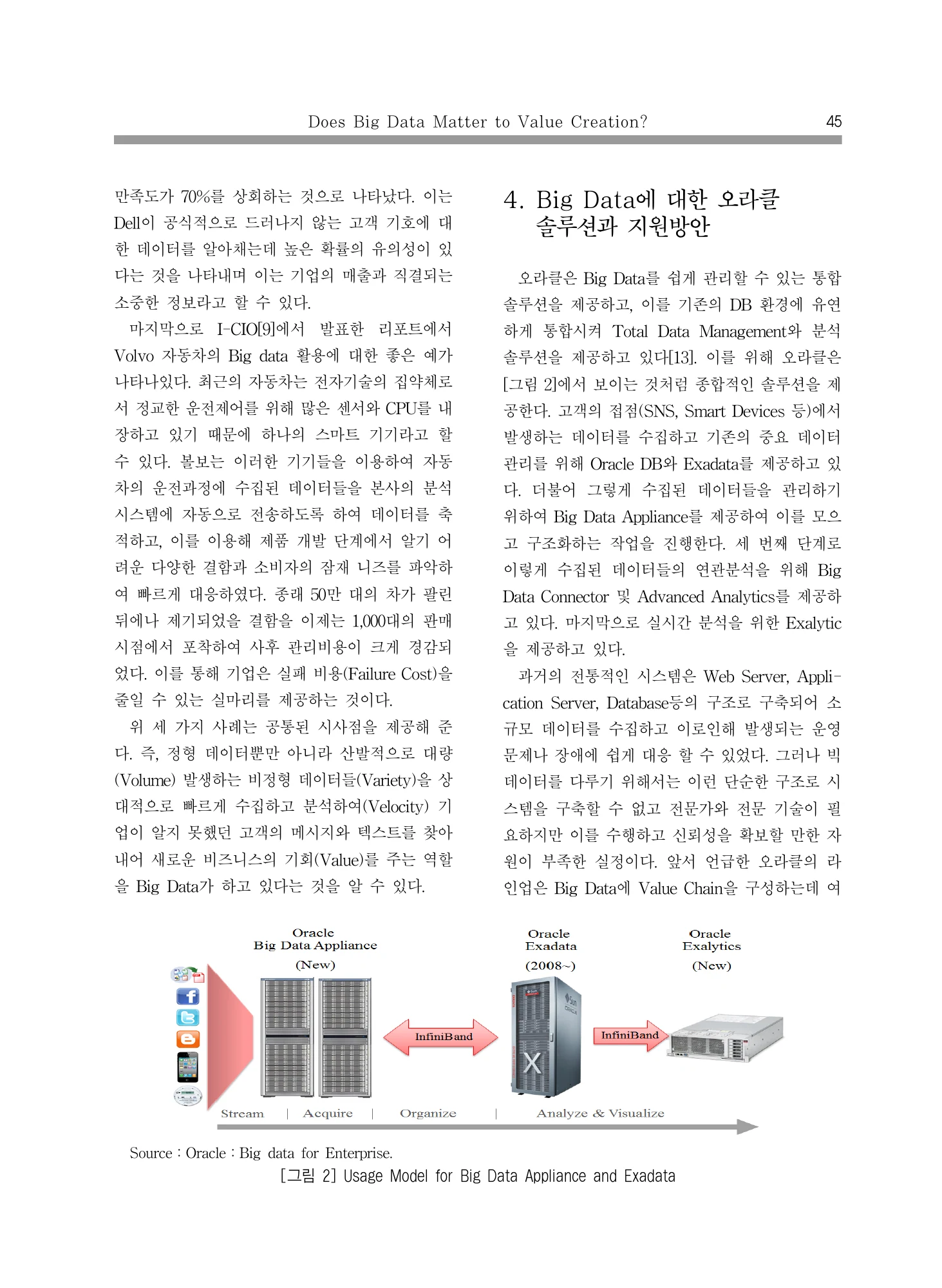
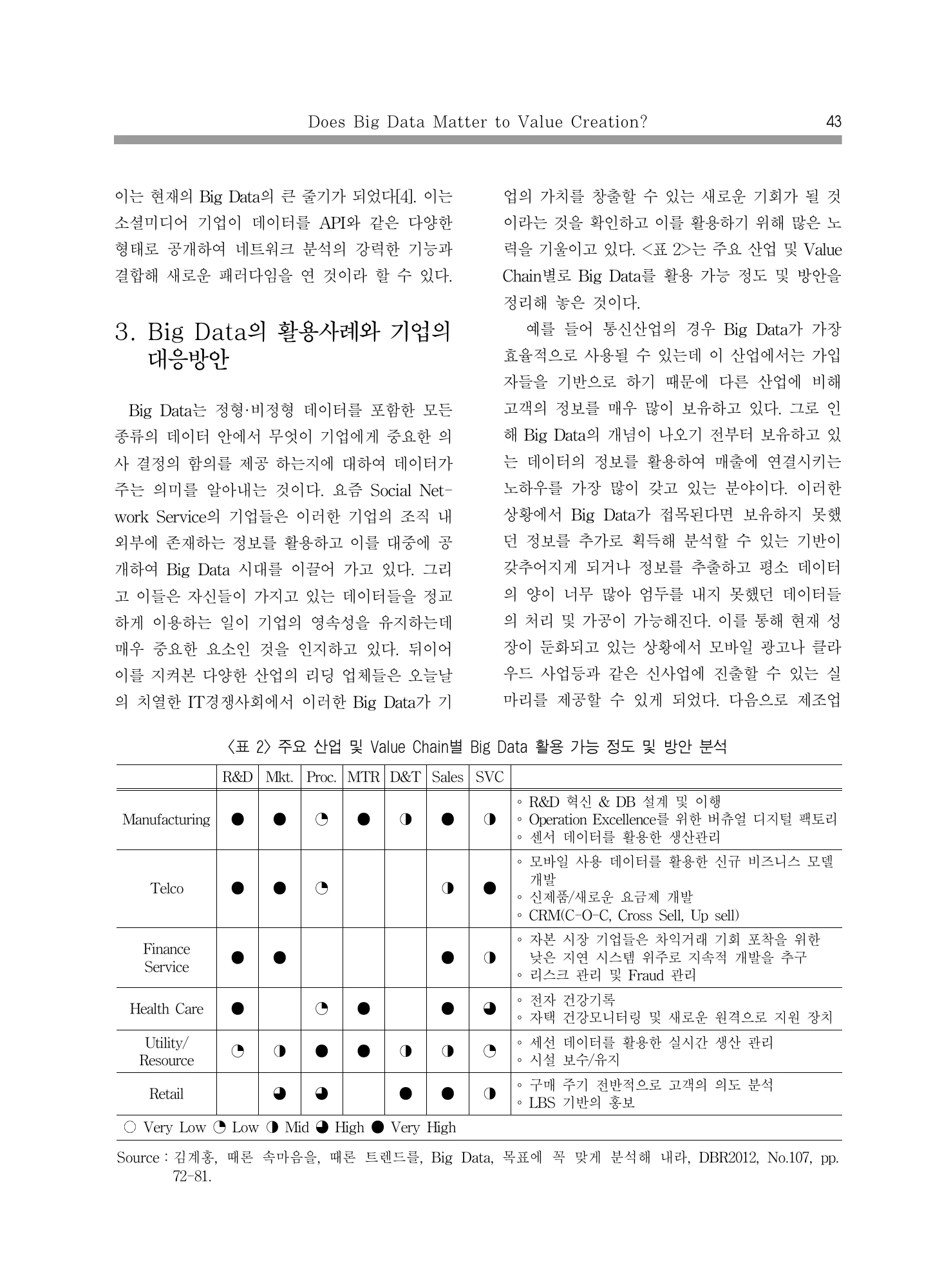
표2 산업·가치사슬별 활용 논의Table 2: applications across industries and value chains
시사점Implications
연구진은 단기적 성과 요구보다 지속적인 데이터 관리 전략과 조직의 해석 능력을 중시한다. 정보 분석센터나 내부 엔지니어링 조직, CIO·CTO 차원의 지속적 관리를 통해 분석 결과가 업무에 받아들여질 조건을 만들자는 제안이다. 해설상 시사점은 도구 구매와 조직 변화가 서로 다른 과제라는 데 있다. 어느 데이터를 왜 모으는지, 기존 시스템과 어떻게 연결하며 담당자가 결과에 따라 무엇을 바꿀 것인지를 함께 설계해야 가치 창출을 논의할 수 있다.
The authors favour sustained data management, organisational interpretation and internal engineering over demands for immediate results. They discuss analytical centres and continuing CIO/CTO involvement. An interpretive lesson is that buying a tool and changing how decisions are made are different tasks. Data selection, integration responsibilities and the actions expected from users should be designed together before claims about value creation can be assessed.
PDF 파일 8, 9쪽PDF pages 8, 9
한계와 해석 범위Limits and interpretation
원문은 기업 활용 사례의 구체성이 부족해 논리적 연결에 한계가 있다고 직접 인정한다. 제품 자료와 성공 사례에 의존하므로 선택 편향이나 공급자 관점이 개입할 수 있고, 실패 사례·비용·대안 기술을 같은 기준으로 비교하지 않았다. 2012년의 구성도와 전망은 역사적 논의이며 현재 오라클 제품의 사양이나 서비스 우열을 보증하지 않는다. 데이터 규모와 예측의 정확성, 사업성과 사이의 인과관계를 식별한 것으로 확대하지 않는 것이 이 해설의 해석 범위다.
The paper explicitly acknowledges insufficiently detailed cases and limits to its logical connections. Reliance on vendor material and selected successes leaves room for selection and supplier perspectives; costs, failures and alternatives are not compared under one design. The architecture is a historical 2012 discussion, not a current specification or product endorsement. No causal relationship between data volume, prediction accuracy and business performance is identified.
PDF 파일 6, 7, 9쪽PDF pages 6, 7, 9
근거 쪽: Evidence pages: 2, 3, 4, 5, 6, 7, 8, 9 · PDF 파일 기준, 인쇄 쪽수와 다를 수 있습니다. · PDF file pagination may differ from printed page numbers.
원문 이미지 보기 · 1장View original document images · 1
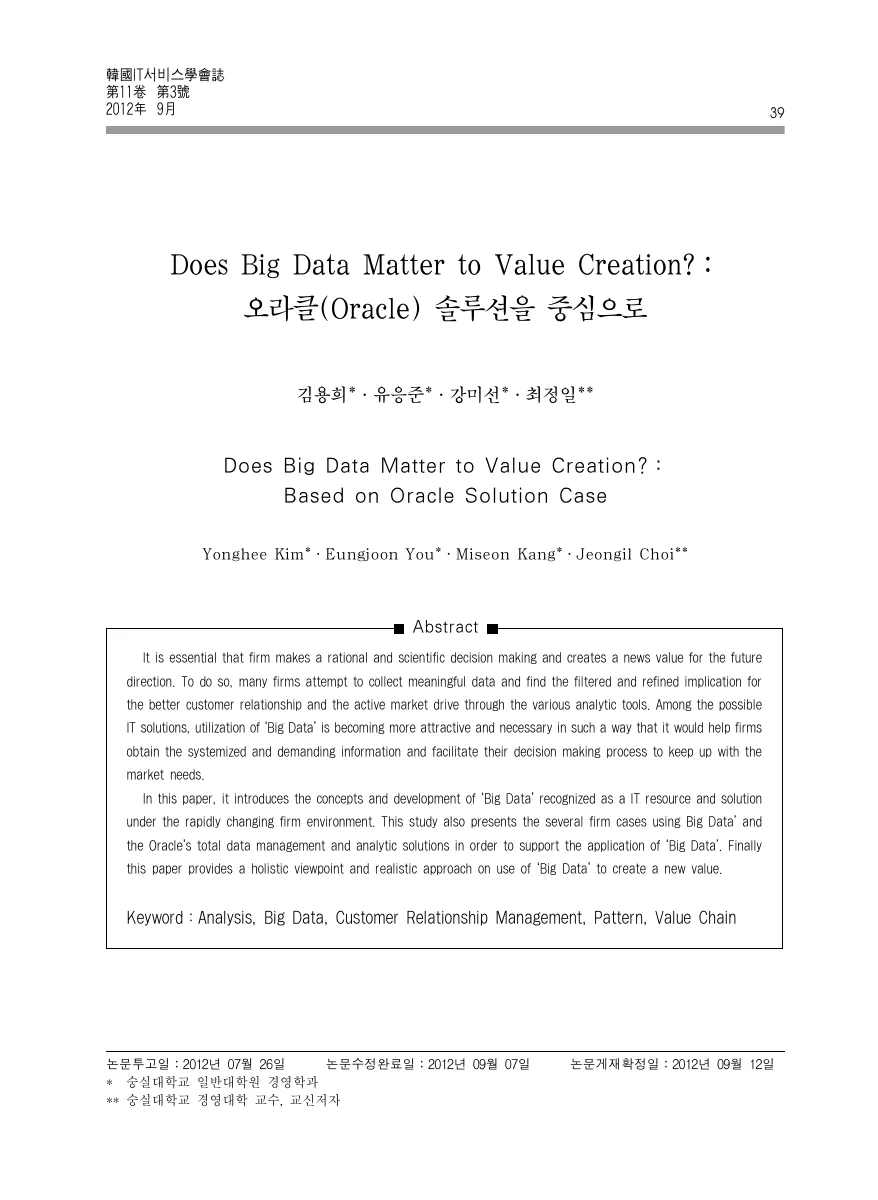
서지 정보Bibliographic information
- 학술지Journal
- 한국IT서비스학회지
- 권(호)Volume (issue)
- 11(3)
- 쪽Pages
- 39–48
- 게재Published
- 2012-09
- 색인Indexing
-
- KCI (저자 실적 기록 기준)(per the author's records)
- 인용Citations
- Google Scholar에서 보기View on Google Scholar (새 창) (opens in a new tab) (2026-09-27 기준)(as of 2026-09-27)
인용하기Cite APA · BibTeX
APA
김용희, 유응준, 강미선, 최정일 (2012). Does Big Data Matter to Value Creation?: 오라클(Oracle) 솔루션을 중심으로. 한국IT서비스학회지, 11(3), 39–48.
BibTeX
@article{kci-2012-bigdata,
  author = {김용희 and 유응준 and 강미선 and 최정일},
  title = {Does Big Data Matter to Value Creation?: 오라클(Oracle) 솔루션을 중심으로},
  journal = {한국IT서비스학회지},
  year = {2012},
  volume = {11},
  number = {3},
  pages = {39--48}
}