지속가능경영을 위한 정보시스템 업그레이드 의사결정 요인의 상호관계: ISM·MICMAC 분석A study on the interrelations of decision-making factors of information system (IS) upgrades for sustainable business using interpretive structural modeling and MICMAC analysis
원문 제목: A study on the interrelations of decision-making factors of information system (IS) upgrades for sustainable business using interpretive structural modeling and MICMAC analysis
번역 제목은 이 사이트의 편집 번역입니다. 서지와 인용에는 원문 제목을 사용합니다.Translated titles are editorial translations for this site. Bibliographic records and citations retain the original title.
저자 표시: Author notes: 굵은 글씨: 김용희Bold: Yonghee Kim 교신저자Corresponding author
Sustainability, 10(3), 논문 번호 872Article 872색인: Indexed in: SSCI
요약Summary
정보시스템 업그레이드 결정 요인의 관계를 사용자·관리자·전문가 집단별 ISM과 MICMAC으로 비교했다. 사용자는 자신의 업무 편익, 관리자는 조직 목표와 편익, 전문가는 조직과 사용자 양쪽의 편익을 상대적으로 중시했다.
ISM and MICMAC compare information-system upgrade decision factors across users, managers, and experts. Users emphasize benefits to their own work, managers emphasize organizational goals, and experts consider benefits to both the organization and users.
한눈에 보기At a glance
- 방법Methods
- Interpretive Structural Modeling
- MICMAC Analysis
- 키워드Keywords
- IS Upgrade
- Decision Making
- ISM
- MICMAC
- Sustainability
- Information Systems
- Organizational Competitiveness
원문을 바탕으로 연구의 논리와 결과를 풀어쓴 해설입니다. 수치는 표시한 표와 쪽을 기준으로 읽습니다. 아래 표는 핵심 항목을 웹에서 읽도록 재구성했고, 원문 표·그림이 있는 페이지를 함께 제공합니다.This reading guide explains the paper’s reasoning and findings in new wording. Tables below re-present selected source results for web reading, alongside images of the relevant original pages.
같은 시스템 업그레이드를 왜 다르게 판단하나Why groups evaluate the same system upgrade differently
정보시스템 업그레이드를 두고 현장 사용자는 업무 편익, 관리자는 투자와 조직 목표, IT 전문가는 예산과 기술 조건을 다르게 볼 수 있습니다. 이 연구는 그런 차이를 단순한 저항으로 묶지 않고, 각 집단이 고려하는 요인과 그 순서를 따로 구조화합니다. 새 시스템의 최초 도입과 기존 시스템 개선의 판단도 구분합니다.
Users, managers and IT experts can judge the same system upgrade through different priorities. This study does not reduce those differences to generic resistance. It separately maps the factors and their relationships for each group, distinguishing decisions about upgrading an existing system from initial adoption of a new one.
PDF 파일 1, 7, 16쪽PDF pages 1, 7, 16
한 조직의 교육 시스템과 30명 참여자One organizational training system and 30 participants
사례는 IT 서비스관리와 연결된 사용자 역량 교육시스템 UCTS의 업그레이드입니다. 2017년 세 차례의 구조화된 브레인스토밍에 관리자 8명, 사용자 15명, IT 전문가 7명 등 총 30명이 참여했습니다. 사용자는 실제 업무에 시스템을 쓰는 직원이고 전문가는 시스템 관리·업그레이드 담당자입니다.
The case concerns an upgrade to UCTS, a user-competency training system linked to IT service management. Three structured brainstorming rounds in 2017 involve 30 participants: eight managers, 15 users and seven IT experts. Users work with the system, whereas experts directly manage and upgrade it.
집단마다 제시한 요인 수와 내용이 다릅니다. 관리자는 ROI와 업무 목표, 사용자는 유용한 정보와 요구 반영, 전문가는 사용자 수·예산·호환성·시험환경 등을 함께 고려합니다. 동일한 설문 문항으로 집단 평균을 비교한 대규모 통계조사와는 다른 자료입니다.
Each group identifies a different set of factors. Managers discuss ROI and business objectives; users emphasize useful information and requirements; experts consider users, budgets, compatibility and testing. This is a structured organizational case, not a large survey comparing mean scores on one identical questionnaire.
PDF 파일 5, 6, 7, 8, 9쪽PDF pages 5, 6, 7, 8, 9
집단별 의사결정 지도를 비교Compare group-specific decision maps
ISM은 요인 간 방향 관계를 행렬로 만든 뒤 단계별 구조도로 정리합니다. MICMAC은 각 요인의 영향력과 의존성을 함께 살핍니다. 이 방법은 최우선이라고 말한 항목과 실제로 다른 판단의 기반에 놓이는 항목이 다를 수 있음을 드러낼 수 있습니다.
ISM converts directional relationships among factors into a layered map, while MICMAC assesses driving and dependence power. The approach can distinguish a factor named as a high priority from a factor placed upstream as a condition for other decisions. Separate maps make the groups’ reasoning structures comparable.
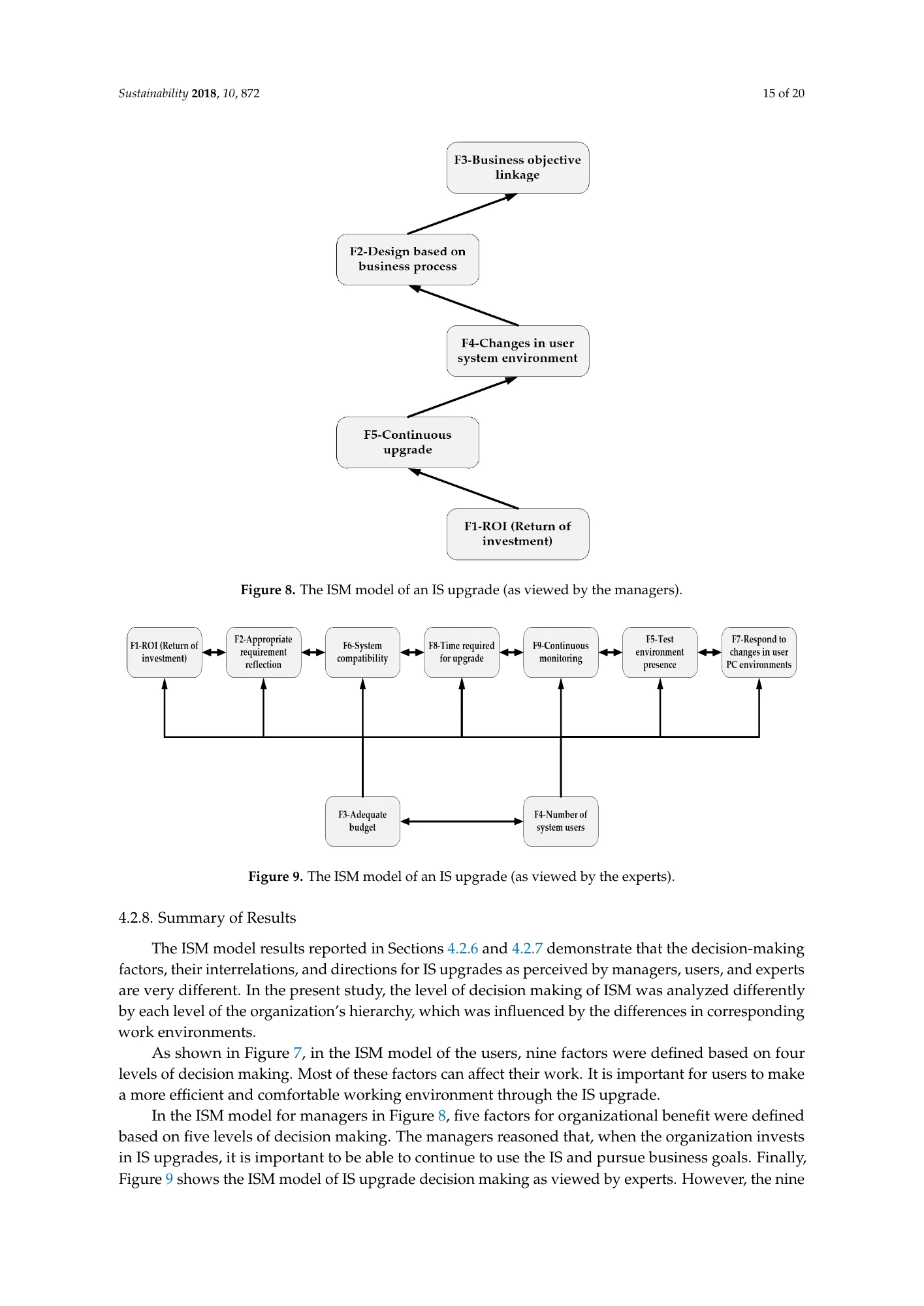
예컨대 전문가의 목록에서는 ROI가 중요해도 구조도에서는 사용자 수와 충분한 예산이 다른 판단의 토대가 됩니다. 이런 관계는 회귀계수나 통계적 영향 크기가 아니라 참여자 판단을 모델링한 결과입니다. 화살표 수가 많은 항목을 자동으로 효과가 큰 정책으로 바꿀 수는 없습니다.
For example, ROI can rank highly in the experts’ factor list while user numbers and adequate budget form the structural foundation. These are modeled judgments, not regression effects. A highly connected factor should not automatically be treated as a quantitatively proven intervention with a large causal benefit.
PDF 파일 7, 8, 10, 11, 12, 13쪽PDF pages 7, 8, 10, 11, 12, 13
사용자·관리자·전문가는 다른 층을 본다Different groups see different layers
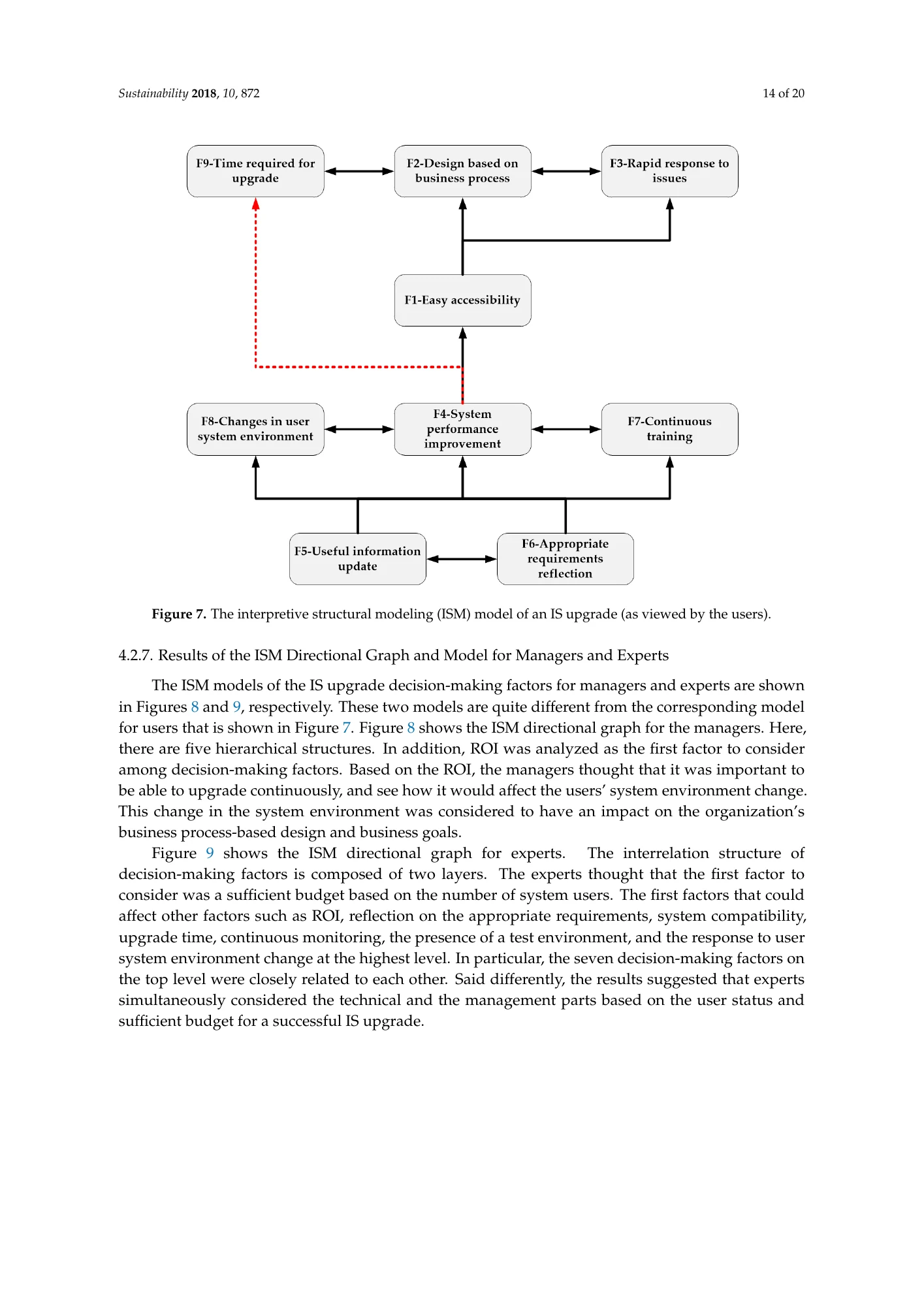
사용자는 9개 요인이 네 층으로 구성되며 자신의 업무에 유용한 정보와 요구 반영을 중시합니다. 관리자는 5개 요인의 다섯 층에서 ROI를 출발점으로 지속적인 업그레이드와 조직 목표를 연결합니다. 전문가는 9개 요인의 두 층으로 기술·관리 조건을 함께 검토합니다.
The user map has nine factors across four levels, emphasizing useful work information and reflected requirements. Managers have five factors across five levels, linking ROI to continued upgrades and organizational objectives. Experts have nine factors across two levels and jointly consider technical and administrative conditions.
세 집단 모두 개선이 조직에 도움이 되기를 기대하지만 '도움'의 의미와 준비 순서가 다릅니다. 따라서 업그레이드 목표를 한 문장의 편의성 또는 투자수익으로 통일하면 중요한 조건을 빠뜨릴 수 있다는 해석입니다. 층의 수 자체가 집단의 우수성이나 합리성을 비교하는 점수는 아닙니다.
All groups expect organizational benefits, but define benefits and preparation differently. Reducing the project to one convenience or ROI target can miss relevant conditions. The number of layers is a description of the elicited structure, not a score of which group is more rational or better at decision making.
PDF 파일 14, 15, 16, 18쪽PDF pages 14, 15, 16, 18
핵심 결과를 표로 읽기Read the key results in tables
| 집단Group | 참여자Participants | 요인·층Factors / levels | 주요 관점Main perspective |
|---|---|---|---|
| 관리자Managers | 8 | 5 / 5 | ROI와 조직 목표ROI and organizational objectives |
| 사용자Users | 15 | 9 / 4 | 업무에 유용한 정보·요구Useful work information and requirements |
| 전문가Experts | 7 | 9 / 2 | 사용자·예산과 기술·관리 조건Users, budget and technical/administrative conditions |
참여자 수는 표 2, 요인·층 수는 4.2.8절과 그림 7~9를 연결해 재구성했습니다. 효과 크기 비교표가 아닙니다.Participant counts come from Table 2; factor/level counts and interpretations come from Section 4.2.8 and Figures 7–9. This is not an effect-size comparison.
원문 표 2·그림 7~9 및 결과절 재구성Adapted from Table 2, Figures 7–9 and results text · PDF 파일 8, 14, 15, 16쪽PDF pages 8, 14, 15, 16
원문의 핵심 표·그래프Key tables & figures in the source
표·그림이 수록된 원문 페이지입니다. 이미지를 누르면 확대할 수 있습니다.Original pages containing the selected tables or figures. Select an image to enlarge it.
사용자의 업그레이드 구조Users’ upgrade model
관리자와 전문가의 서로 다른 구조Manager and expert structures
업그레이드 요구를 역할별로 수집하고 연결Elicit and connect requirements by role
실무적 시사점은 요구 수집과 설명을 집단별로 설계하라는 것입니다. 관리자는 업무 목표와 투자, 사용자는 정보와 작업 흐름, 전문가는 예산·시험·호환성을 확인한 뒤 서로의 조건을 연결할 수 있습니다. 연구는 이런 협의 틀을 제공하지만 도입 후 비용 절감이나 성과 향상의 크기를 측정하지는 않았습니다.
The managerial implication is to tailor elicitation and communication by role: objectives and investment for managers, information and workflow for users, and budget, testing and compatibility for experts. The framework supports coordination, but the study does not quantify post-upgrade cost savings or performance improvements caused by using it.
PDF 파일 16, 17, 18쪽PDF pages 16, 17, 18
한 사례의 판단 지도를 보편적 순위로 읽지 않기Do not universalize a single-case hierarchy
한 조직과 특정 시스템의 관계 모형이므로 조직문화·기술 환경·운영 방식에 따라 다른 결과가 가능합니다. 저자도 환경 요인을 넓히고 다른 구조분석 방법과 비교할 필요를 밝힙니다. 30명이라는 참여 범위와 원문의 구체적 사례를 유지해, 모든 조직의 업그레이드 우선순위로 확대하지 않습니다.
The maps arise from one organization and one system. Organizational culture, technology and operating conditions can change the relationships. The authors call for wider contexts and comparison with other structural methods. The 30-person case should not be presented as a universal ranking for all enterprise-system upgrades.
PDF 파일 18쪽PDF page 18
근거 쪽: Evidence pages: 1, 5, 6, 7, 8, 9, 10, 11, 12, 13, 14, 15, 16, 17, 18 · PDF 파일 기준, 인쇄 쪽수와 다를 수 있습니다. · PDF file pagination may differ from printed page numbers. 원문 출처 ↗Source ↗
원문 이미지 보기 · 1장View original document images · 1
서지 정보Bibliographic information
- 학술지Journal
- Sustainability
- 권(호)Volume (issue)
- 10(3)
- 논문 번호Article number
- 872
- 게재Published
- 2018-03-19
- 색인Indexing
-
- SSCI (저자 실적 기록 기준)(per the author's records)
- 인용Citations
- Google Scholar 인용 17Cited by 17 (Google Scholar) (새 창) (opens in a new tab) (2026-09-27 기준)(as of 2026-09-27)
인용하기Cite APA · BibTeX
APA
Kim, D., Kim, Y., & Lee, N. (2018). A study on the interrelations of decision-making factors of information system (IS) upgrades for sustainable business using interpretive structural modeling and MICMAC analysis. Sustainability, 10(3), Article 872. https://doi.org/10.3390/su10030872
BibTeX
@article{kim2018-is,
  author = {Kim, Dosung and Kim, Yonghee and Lee, Namyong},
  title = {A study on the interrelations of decision-making factors of information system ({IS}) upgrades for sustainable business using interpretive structural modeling and {MICMAC} analysis},
  journal = {Sustainability},
  year = {2018},
  volume = {10},
  number = {3},
  eid = {872},
  doi = {10.3390/su10030872}
}