RPA (Robotic Process Automation) 도입을 통한 기대성과요인의 상대적 중요도와 우선순위에 관한 연구Relative Importance and Priorities of Expected Performance Factors in Robotic Process Automation Adoption
Original title: RPA (Robotic Process Automation) 도입을 통한 기대성과요인의 상대적 중요도와 우선순위에 관한 연구
번역 제목은 이 사이트의 편집 번역입니다. 서지와 인용에는 원문 제목을 사용합니다.Translated titles are editorial translations for this site. Bibliographic records and citations retain the original title.
저자 표시: Author notes: 굵은 글씨: 김용희Bold: Yonghee Kim 교신저자Corresponding author
한국IT정책경영학회 논문지, 10(5), 955–961색인: Indexed in: KCI
요약Summary
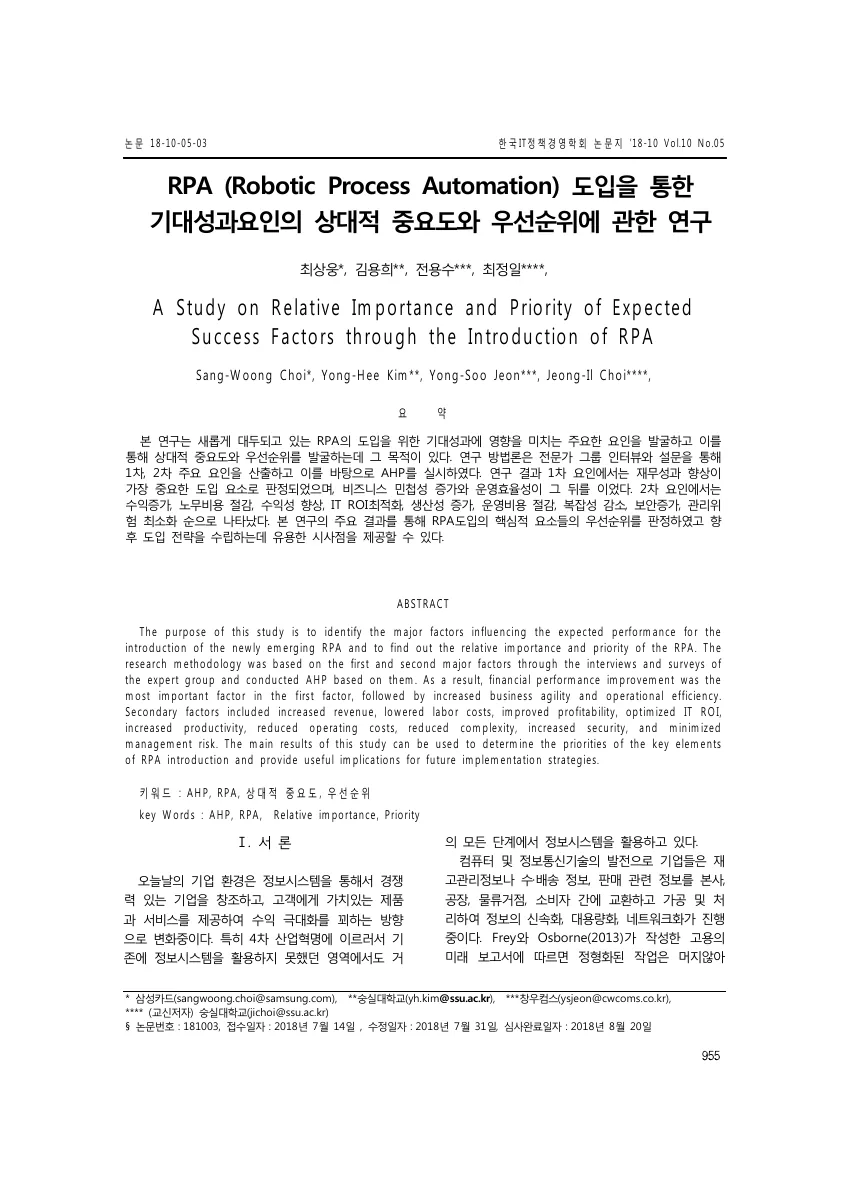
전문가 인터뷰와 설문으로 RPA 도입의 기대성과 요인을 도출하고 AHP로 중요도와 우선순위를 분석했다. 1차 요인에서는 재무성과 향상, 비즈니스 민첩성, 운영효율성 순으로 중요도가 높았다.
Expert interviews and surveys identify expected outcomes of RPA adoption, with AHP used to rank priorities. Financial-performance improvement ranks first among primary factors, followed by business agility and operational efficiency.
한눈에 보기At a glance
- 방법Methods
- Expert Interviews
- Analytic Hierarchy Process
원문을 바탕으로 연구의 논리와 결과를 풀어쓴 해설입니다. 수치는 표시한 표와 쪽을 기준으로 읽습니다. 아래 표는 핵심 항목을 웹에서 읽도록 재구성했고, 원문 표·그림이 있는 페이지를 함께 제공합니다.This reading guide explains the paper’s reasoning and findings in new wording. Tables below re-present selected source results for web reading, alongside images of the relevant original pages.
RPA 도입을 평가할 때 무엇을 먼저 기대하는가Which expected outcomes matter when considering RPA?
이 논문은 RPA가 얼마나 비용을 줄였는지 사후 효과를 측정하는 대신, 도입을 검토하는 전문가들이 어떤 성과를 더 중요하게 보는지 묻는다. 단순 반복 업무 자동화라는 공통 설명 아래에도 재무성과, 비즈니스 민첩성, 운영 최적화의 우선순위는 다를 수 있다. 실제 도입 사업자와 컨설턴트가 같은 기대를 갖는지도 비교한다. 따라서 ‘RPA를 도입하면 이 비율만큼 성과가 개선된다’가 아니라 ‘도입 목표에 부여한 상대적 가중치’에 관한 연구다.
The study asks which expected outcomes experts prioritize when considering RPA, rather than estimating realized cost savings after implementation. Financial performance, business agility, and operational optimization can carry different weights even when all involve automating repetitive work. It also compares adopters with consultants. The reported percentages are relative priorities, not percentage improvements caused by RPA.
PDF 파일 1, 2, 3, 5, 6쪽PDF pages 1, 2, 3, 5, 6
전문가가 구성한 3개 상위·9개 하위 요인Three main criteria and nine subcriteria
4명의 전문가 연구반이 선행연구와 실무 자문을 거쳐 3개 상위 요인과 9개 하위 요인을 구성했다. 설문 35건 중 일관성 비율 CR≤.1인 20건을 분석했다. 분석 표본은 사업자 6명, 컨설턴트 14명이며 남성이 18명이다. 하위 요인은 수익·생산성·수익성, 운영비·노무비·IT ROI, 관리위험·보안·복잡성으로 나뉜다. 실제 기업 재무제표나 자동화 처리 로그가 아니라 전문가의 비교 판단이 자료다.
Four experts developed three main criteria and nine subcriteria using prior research and practitioner advice. Of thirty-five questionnaires, twenty met CR≤.1 and were analyzed: six business respondents and fourteen consultants, with eighteen men. Subcriteria cover revenue, productivity, profitability, costs, IT ROI, risk, security, and complexity. The evidence consists of expert comparisons, not financial statements or automation logs.
PDF 파일 3, 4쪽PDF pages 3, 4
두 요인을 비교해 상대 가중치를 구하는 AHPAHP derives relative weights from pairwise comparisons
계층분석법(AHP)은 복잡한 결정을 요인 계층으로 나누고 두 항목 중 어느 쪽이 얼마나 중요한지 비교하게 한다. 응답의 논리적 일관성을 확인한 후 개인 판단을 기하평균으로 통합한다. 이렇게 얻은 가중치는 선정된 요인 집합 안에서의 상대 중요도다. 낮은 가중치가 중요하지 않다는 뜻이나 보안·위험 관리를 생략해도 된다는 뜻은 아니다. 사업자·컨설턴트 비교도 작은 두 집단의 기술적 비교로, 유의한 모집단 차이를 검정한 결과와는 구분해야 한다.
Analytic Hierarchy Process decomposes a decision into criteria and compares their relative importance in pairs. After consistency screening, judgments are aggregated using geometric means. Weights are relative to the selected criteria set. A lower weight does not justify omitting security or risk management. The business–consultant comparison is descriptive for two small groups, not a demonstrated population-level difference.
PDF 파일 3, 4, 5쪽PDF pages 3, 4, 5
전체는 재무성과, 사업자 집단은 민첩성을 우선Finance leads overall, agility leads among business respondents
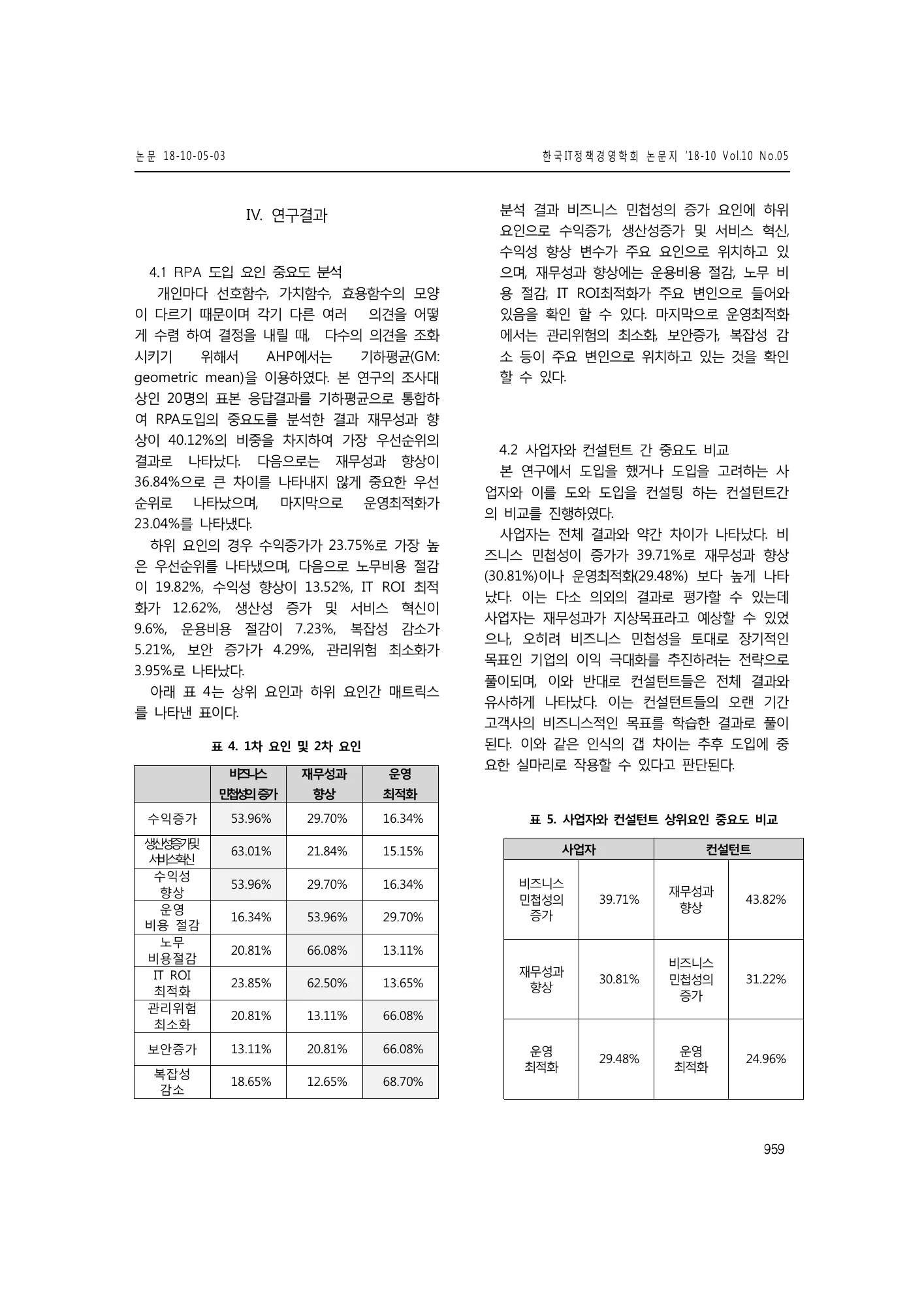
초록은 상위 우선순위를 재무성과 향상, 비즈니스 민첩성, 운영효율성 순으로 정리한다. 하위 요인은 수익 증가 23.75%, 노무비 절감 19.82%, 수익성 향상 13.52%, IT ROI 최적화 12.62% 순으로 보고된다. 집단 비교 표에서는 사업자가 민첩성 39.71%·재무성과 30.81%·운영 최적화 29.48%, 컨설턴트가 재무성과 43.82%·민첩성 31.22%·운영 최적화 24.96%다. 동일한 자동화 사업을 보더라도 기대 목표의 구성이 다를 수 있다는 점이 핵심이다.
The abstract ranks financial performance first, followed by agility and operational efficiency. Reported subcriterion weights begin with revenue growth, 23.75%; labor-cost reduction, 19.82%; profitability, 13.52%; and IT ROI, 12.62%. Business respondents weight agility at 39.71%, finance at 30.81%, and operations at 29.48%. Consultants weight finance at 43.82%, agility at 31.22%, and operations at 24.96%, revealing different expected-goal profiles.
PDF 파일 1, 5쪽PDF pages 1, 5
핵심 결과를 표로 읽기Read the key results in tables
| 요인Criterion | 사업자(n=6)Business (n=6) | 컨설턴트(n=14)Consultants (n=14) |
|---|---|---|
| 비즈니스 민첩성 증가Business agility | 39.71% | 31.22% |
| 재무성과 향상Financial performance | 30.81% | 43.82% |
| 운영 최적화Operational optimization | 29.48% | 24.96% |
원문 표 5를 같은 요인 순서로 재배열했다. 각 집단 내 합계는 100%이며 AHP 상대 중요도다. 실현된 생산성 개선율이나 인과효과가 아니다. 집단 표본이 작아 차이를 일반화하지 않는다.Table 5 rearranged into a common criterion order. Weights sum to 100% within each group and represent AHP priorities, not realized productivity improvements or causal effects. Small group samples limit generalization.
원문 표 5Original Table 5 · PDF 파일 4, 5쪽PDF pages 4, 5
원문의 핵심 표·그래프Key tables & figures in the source
표·그림이 수록된 원문 페이지입니다. 이미지를 누르면 확대할 수 있습니다.Original pages containing the selected tables or figures. Select an image to enlarge it.
표 1: 1차·2차 요인 계층Table 1: Main criteria and subcriteria
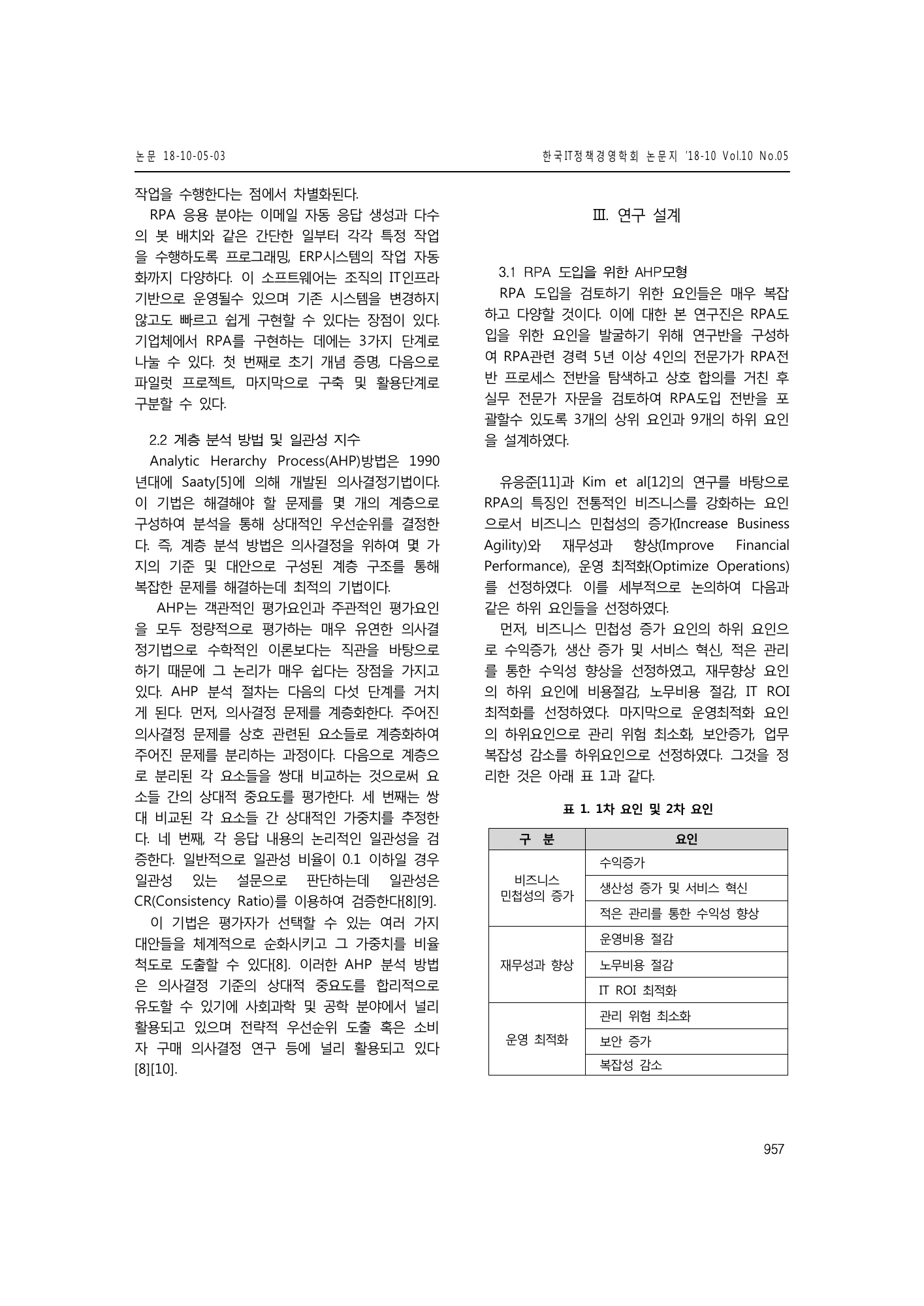
표 5: 사업자·컨설턴트 중요도 비교Table 5: Business–consultant priority comparison
도입 전에 성과 목표를 합의하는 도구A tool for agreeing implementation objectives
저자들은 도입 기업과 컨설팅사 사이의 유기적 의사소통, 프로세스 적합성 확인, ROI와 비용뿐 아니라 민첩성 목표의 공유를 강조한다. 실무에서는 이 계층을 그대로 정답으로 복사하기보다 조직별 도입 목적과 평가 지표를 토론하는 출발점으로 활용할 수 있다. 수익 확대와 반복 작업 효율화가 서로 다른 기대라면 파일럿의 대상 업무와 성공 기준도 달라져야 한다는 해석이 가능하다. 다만 실제 업무별 수익이나 오류 감소를 검증한 실험 결과는 아니다.
The authors emphasize communication between adopters and consultants and alignment with business processes. The hierarchy can structure discussions about objectives and evaluation metrics rather than provide a universal answer. Revenue expansion and repetitive-task efficiency may imply different pilot scopes and success criteria. Such implementation lessons are interpretations of priority judgments, not experimentally validated returns or error reductions.
PDF 파일 3, 5, 6쪽PDF pages 3, 5, 6
작은 전문가 표본과 원문 표기의 불일치Small expert sample and source inconsistencies
저자들은 적은 도입 사업자 표본으로 일반화가 어렵고 산업별 비교와 중요도·성취도 분석 등 후속 연구가 필요하다고 밝힌다. 원문 전체 가중치 설명은 40.12% 다음 36.84%의 항목명을 모두 재무성과로 중복 표기해 두 번째 명칭 확인이 필요하다. 설문 시점도 2018년 10월로 쓰여 8월 심사완료 표기와 순서가 맞지 않는다. 이 해설은 집단별 명칭과 수치가 명확한 표 5를 중심으로 제시하며 불일치를 임의로 고쳐 확정하지 않는다.
The authors note the limited adopter sample and call for industry comparisons and alternative evaluation methods. Source wording duplicates the finance label for overall weights of 40.12% and 36.84%, leaving the second label unclear. The reported October 2018 survey also follows the stated August review completion. This explanation emphasizes the clearly labeled group comparison in Table 5 and does not silently repair these discrepancies.
PDF 파일 1, 4, 5, 6쪽PDF pages 1, 4, 5, 6
근거 쪽: Evidence pages: 1, 2, 3, 4, 5, 6, 7 · PDF 파일 기준, 인쇄 쪽수와 다를 수 있습니다. · PDF file pagination may differ from printed page numbers.
원문 이미지 보기 · 1장View original document images · 1
서지 정보Bibliographic information
- 학술지Journal
- 한국IT정책경영학회 논문지
- 권(호)Volume (issue)
- 10(5)
- 쪽Pages
- 955–961
- 게재Published
- 2018-10
- 색인Indexing
-
- KCI (저자 실적 기록 기준)(per the author's records)
- 인용Citations
- Google Scholar 인용 5Cited by 5 (Google Scholar) (새 창) (opens in a new tab) (2026-09-27 기준)(as of 2026-09-27)
인용하기Cite APA · BibTeX
APA
최상웅, 김용희, 전용수, 최정일 (2018). RPA (Robotic Process Automation) 도입을 통한 기대성과요인의 상대적 중요도와 우선순위에 관한 연구. 한국IT정책경영학회 논문지, 10(5), 955–961.
BibTeX
@article{kci-2018-rpa,
  author = {최상웅 and 김용희 and 전용수 and 최정일},
  title = {{RPA} (Robotic Process Automation) 도입을 통한 기대성과요인의 상대적 중요도와 우선순위에 관한 연구},
  journal = {한국IT정책경영학회 논문지},
  year = {2018},
  volume = {10},
  number = {5},
  pages = {955--961}
}