흥행 회복이 다음 영화의 투자로 돌아오려면
2026년 9월 17일 부산 파라다이스호텔에서 열린 한국영화 산업 활력 제고 정책 포럼에서 발표했습니다. 주제는 「흥행 회복을 다음 제작으로」였습니다. 관객과 매출의 반등을 다음 작품의 제작 여건과 연결하려면 무엇을 설계해야 하는가를 중심에 놓았습니다.
진단: 회수와 공급을 함께 봐야 합니다
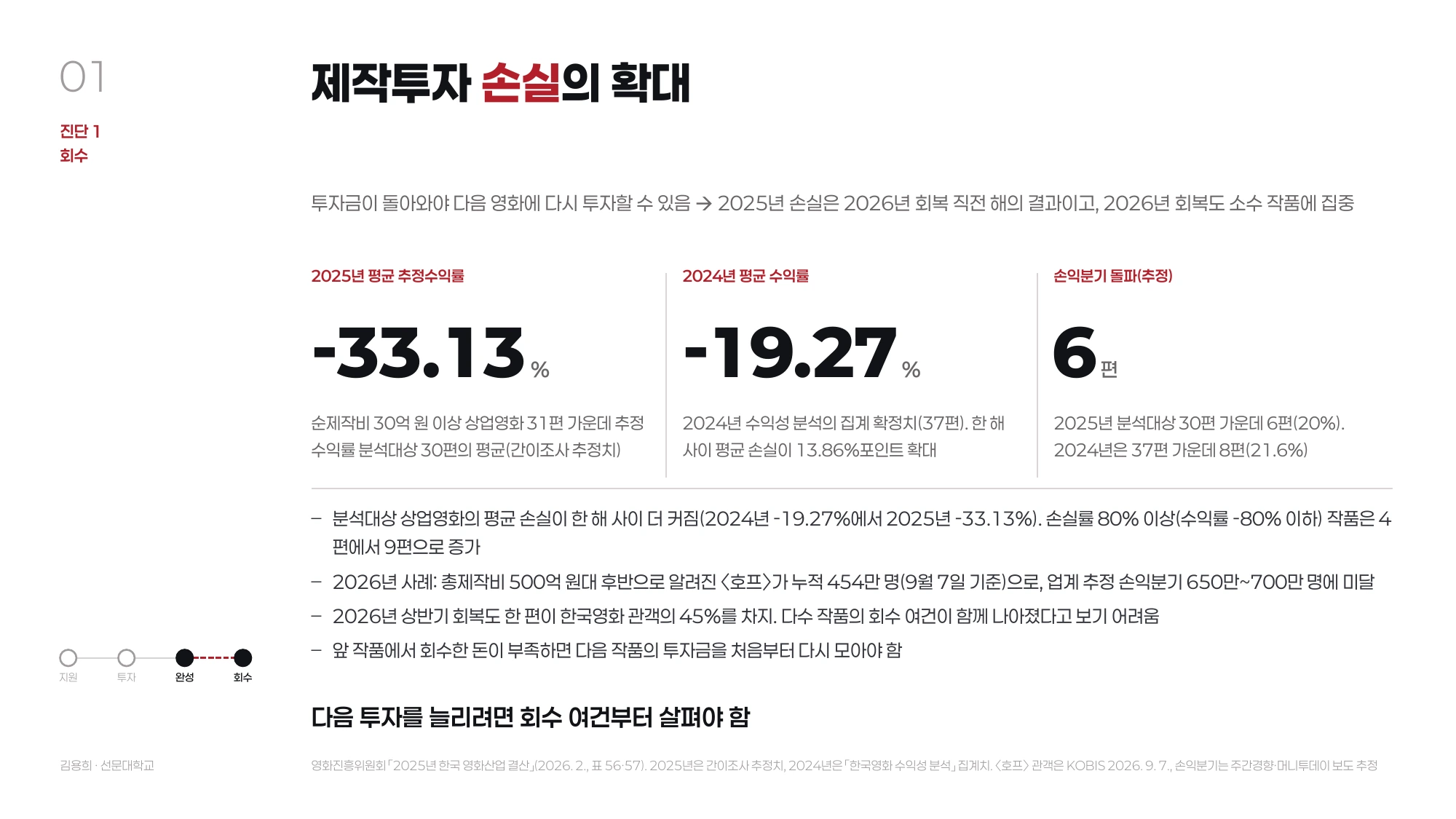
발표자료는 2025년 상업영화 수익성 분석 대상 30편의 평균 추정수익률 −33.13%와 2024년 37편의 평균 수익률 −19.27%를 구분해 제시했습니다. 두 해의 조사·집계 방식과 표본이 같지 않으며, 모든 영화의 확정 손익도 아닙니다. 다만 앞 작품에서 돈을 회수하지 못하면 다음 작품의 투자금을 다시 모아야 한다는 문제를 보여주는 진단 자료로 사용했습니다.
2026년 관객 회복이 소수 작품에 집중된 상황에서는 시장 총량이 좋아지는 것과 다수 제작사의 자금 순환이 나아지는 것을 함께 확인해야 합니다. 발표의 초점은 흥행작 숫자를 늘어놓는 데서 지원→투자→완성→회수의 연결을 설계하는 쪽으로 옮겨갔습니다.
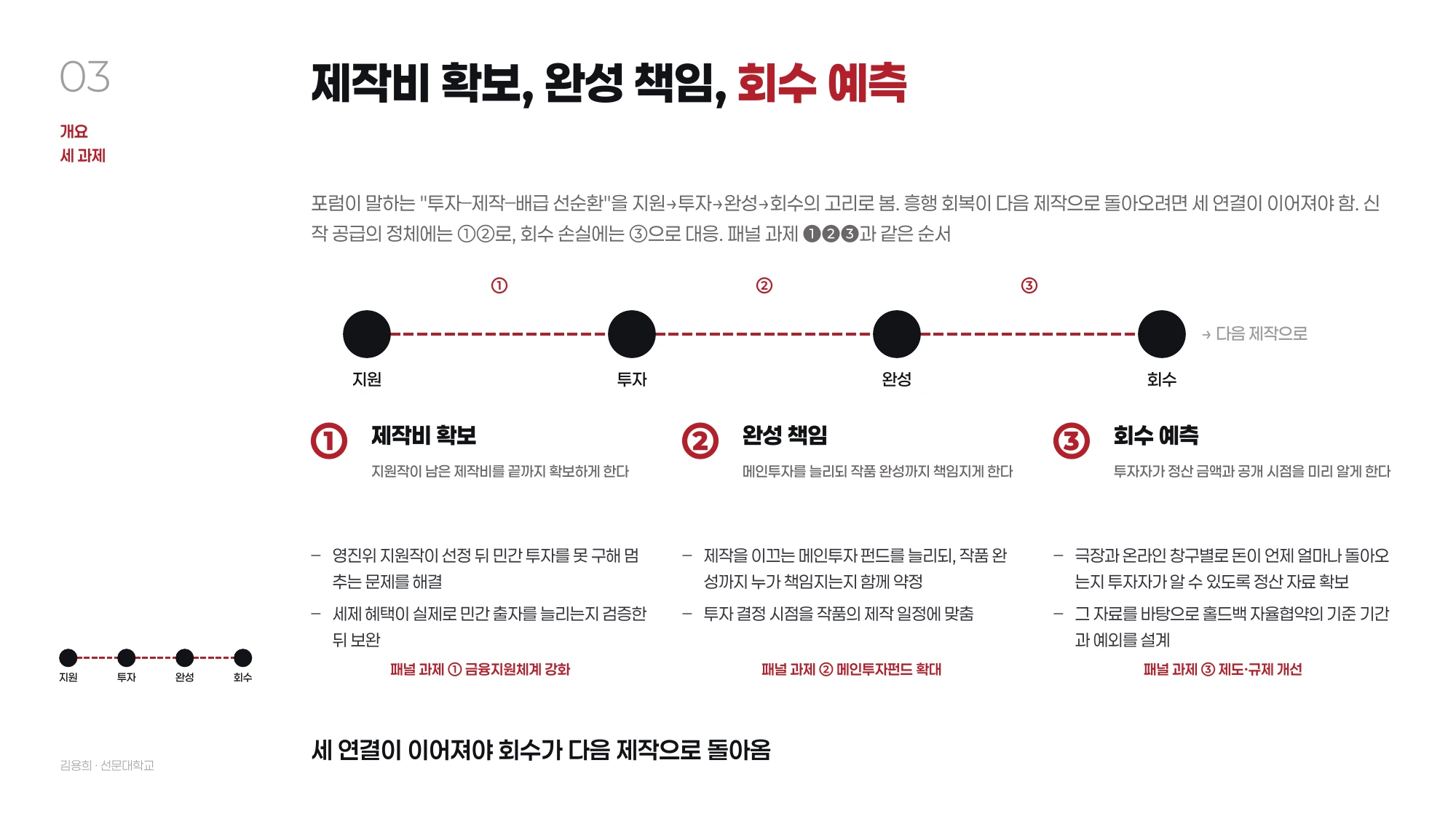
세 과제의 연결
| 과제 | 연결할 지점 | 실행에서 확인할 것 |
|---|---|---|
| 제작비 확보 | 지원 선정 뒤 남은 제작비 조달 | 조달 완료 비율·투자 검토 기간·지원 취하 사유 |
| 완성 책임 | 메인투자의 확대와 작품 완성 | 조달·완성·정산 책임자와 제작 일정에 맞는 결정 |
| 회수 예측 | 창구별 정산자료와 공개 시점 | 실제 회수액·정산 기준·회수 지연 비용 |
1. 지원작이 남은 제작비를 확보하게 하는 연결
지원에 선정된 작품도 민간 투자를 구하지 못하면 제작이 멈출 수 있습니다. 이를 위해 제작사의 동의를 받아 시나리오·예산·캐스팅 계획 같은 심사자료와 투자 검토 일정을 참여 운용사와 연결하는 시범사업을 제안했습니다. 자료 공유가 투자 승인을 뜻하지 않으며 투자 여부는 운용사가 독립적으로 판단하는 구조입니다.
보증·융자, 정책펀드, 직접 지원은 각각 메우는 공백이 다릅니다. 이미 판매계약이 있는데 현금 유입이 늦는 경우와 아직 투자자를 찾지 못한 경우를 같은 문제로 취급하면 수단의 효과를 보기 어렵습니다. 선정 이후 실제로 제작비를 채웠는지, 검토에 얼마나 걸렸는지를 측정해야 합니다.
2. 세제 확대는 추가 민간 출자 효과와 함께 검토
발표에서는 소득공제와 세액공제, 투자금 기준 공제와 제작비 기준 공제를 구분했습니다. 서로 다른 제도의 공제율만 나란히 놓으면 실제 혜택과 유인을 잘못 비교할 수 있습니다.
제안은 공제율을 확대하기 전에 그 조건에서 민간 출자가 얼마나 추가되는지를 제시하고 세수 감소와 비교하자는 것입니다. 적용 대상·최소 보유기간·조건 위반 시 환수 같은 설계도 함께 검토해야 합니다. 이는 당시 발표의 정책 검토 방향이며 현재 세무 처리의 안내가 아닙니다.
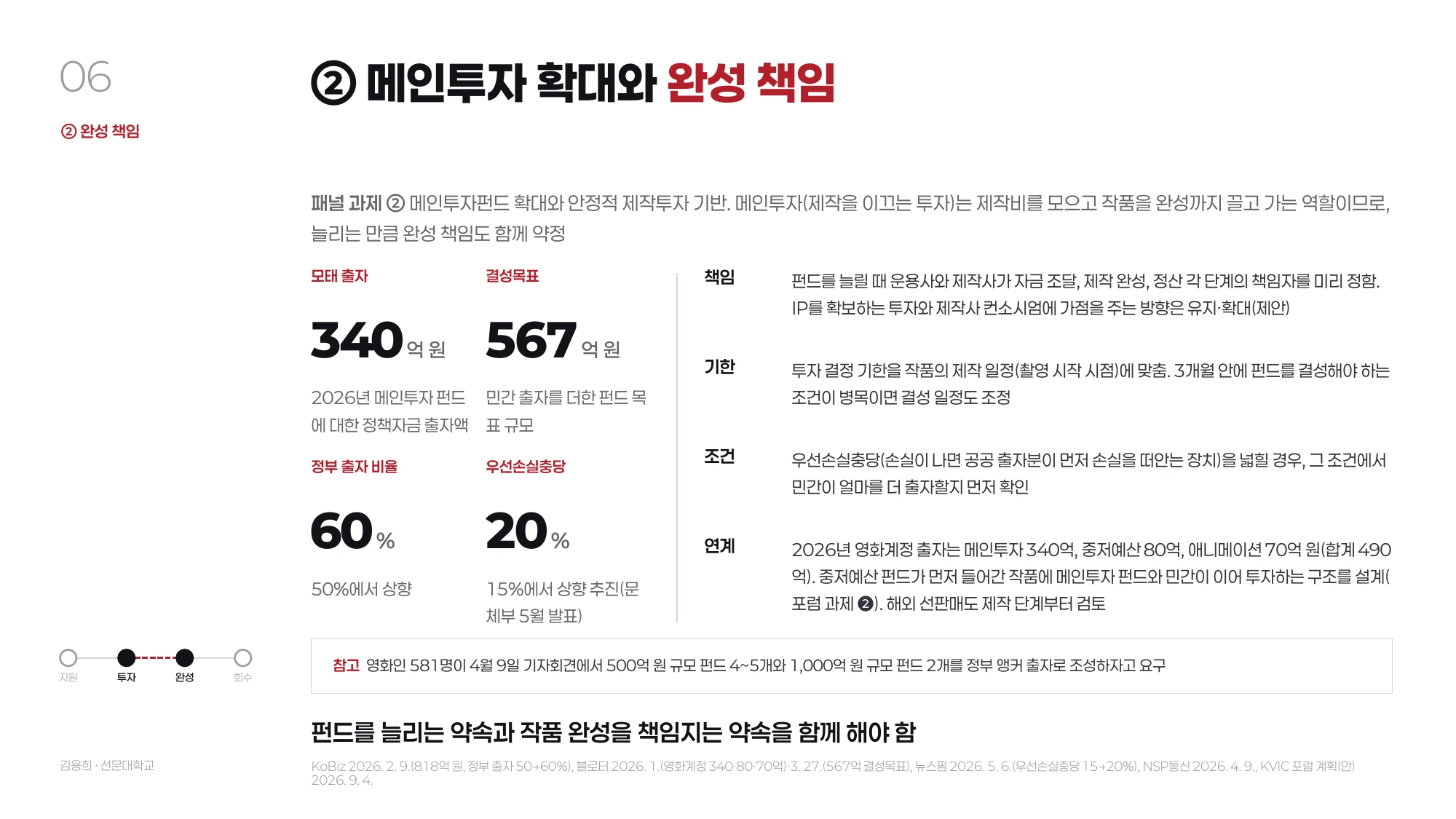
3. 메인투자를 늘릴 때 완성 책임도 명확히
메인투자는 단순히 돈을 먼저 넣는 역할을 넘어 제작비를 모으고 작품을 완성까지 이끄는 기능을 합니다. 발표에서는 자금 조달·제작 완성·정산의 각 단계에 책임자를 명시하고, 투자 결정 기한을 실제 촬영 일정에 맞추는 방안을 제안했습니다.
공공 출자가 손실을 먼저 부담하는 조건을 넓힐 때에도, 그 조건에서 민간이 얼마를 더 출자할지를 확인해야 합니다. 중저예산 펀드가 먼저 들어간 작품에 메인투자와 민간 자금이 이어질 수 있도록 설계하고, 해외 선판매도 제작 단계부터 검토할 과제로 제시했습니다.
4. 회수 예측은 정산자료와 창구별 공개 시점에서 출발
극장과 온라인에서 돈이 언제 얼마나 돌아오는지 알 수 있어야 다음 투자의 판단도 가능해집니다. 할인 비용을 누가 부담했는지, 정산의 기준 금액과 자료 제공 주기는 무엇인지 합의하는 표준 정산명세 시범사업을 제안했습니다.
홀드백도 극장→건별 결제 영상(TVOD)과 TVOD→구독형 영상(SVOD)의 서로 다른 구간을 나눠 봐야 합니다. 기간을 늘리는 것만으로 수익이 좋아진다고 단정하기보다 창구별 총회수액과 회수 지연 비용을 비교해 기준과 예외를 설계해야 한다는 입장입니다.
실행 주체에게 남긴 질문
- 영진위·한국벤처투자·운용사는 어떤 지원작부터 자료와 일정을 연결하고 독립적인 투자 판단을 어떻게 보장할 것인가.
- 운용사·제작사는 어느 단계의 제작 완성 책임을 약정하고, 결정 기한을 어떻게 제작 일정과 맞출 것인가.
- 문체부·영진위·극장·배급사·온라인 플랫폼은 누구와 언제 정산 시범사업을 시작하고, 어떤 회수 자료로 공개 시점의 기준과 예외를 판단할 것인가.
세 과제는 예산 확대의 선언을 실제로 다음 영화를 시작하는 조건으로 바꾸기 위한 질문입니다. 발표에서 제안한 방안과 이후 제도 시행·투자 성과는 구분해 기록합니다.
당시 공개한 발표자료 표지
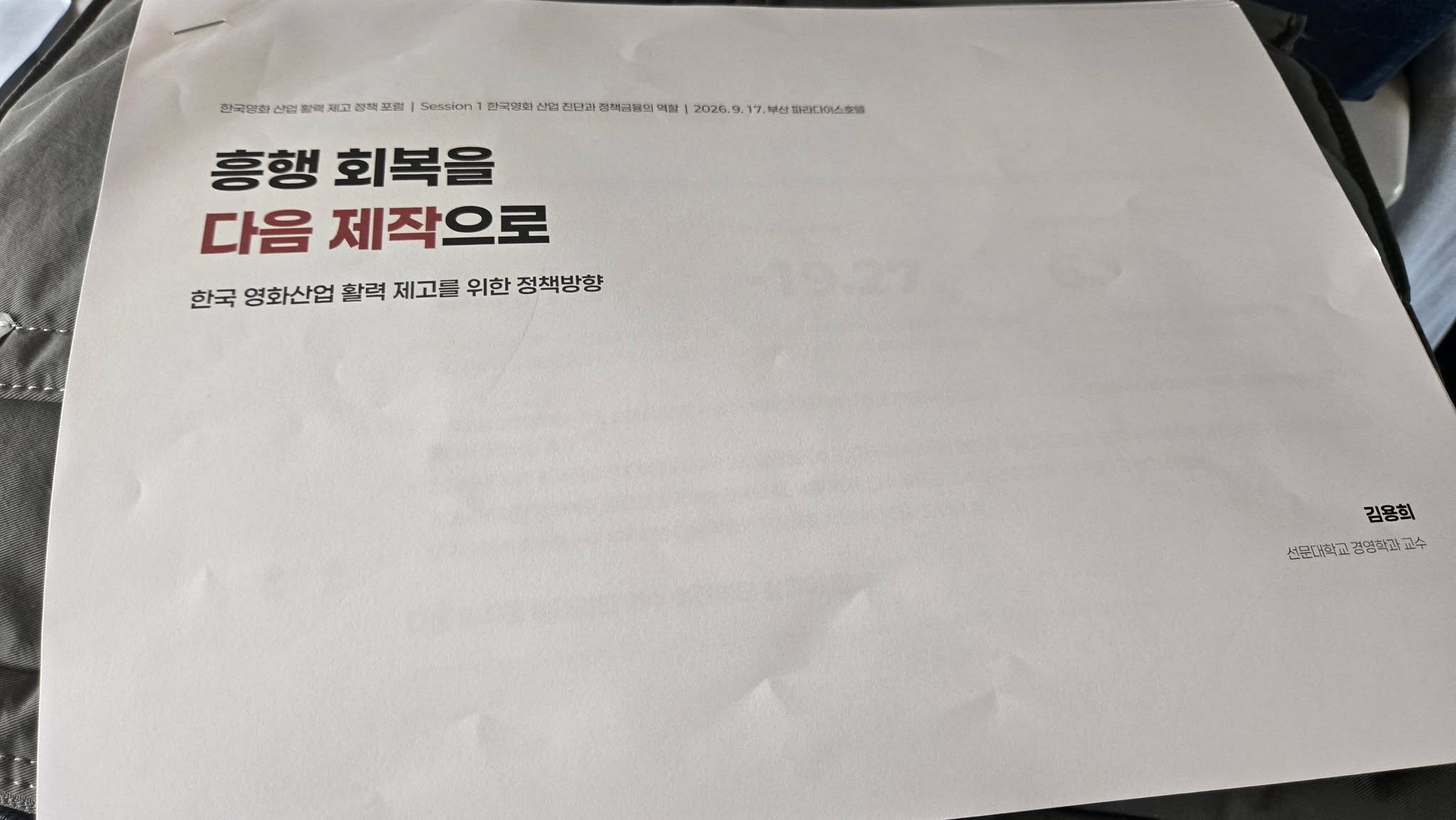
본문은 16쪽 최종 발표자료와 발표 스크립트를 대조해 정리했습니다.
Turning box-office recovery into financing for the next film
At the Korean Film Revitalization Policy Forum in Busan on 17 September 2026, I asked what connects an audience recovery with the conditions for another production. The presentation followed the chain support → investment → completion → recovery.
Diagnosis: recovery and supply need to be examined together
The presentation distinguished the −33.13% estimated average return for 30 analyzed commercial films in 2025 from the −19.27% average for 37 films in 2024. Methods and samples differ, and these are not final profits for every film. They illustrate the financing problem when proceeds from one production do not return for the next.
An aggregate audience rebound concentrated in a few works does not by itself establish better financing conditions across production companies.
Three connected tasks
| Task | Link to build | What to monitor |
|---|---|---|
| Secure production finance | Support selection to the remaining budget | Financing completion, review time and withdrawals |
| Define completion responsibility | Lead investment to a completed work | Responsible parties and decisions matched to schedules |
| Improve recovery forecasts | Settlement records and release windows | Actual receipts, settlement rules and delay costs |
1. Connect supported projects with remaining finance
Selection for support does not guarantee the rest of a budget. I proposed a pilot connecting consenting producers’ review material—scripts, budgets and casting plans—with participating fund managers and a defined review schedule. Sharing information would not constitute investment approval; managers would retain independent judgment.
Guarantees, loans, funds and grants address different gaps. A delayed payment under an existing sales contract differs from a project still seeking investors. Evaluation should follow whether financing was actually completed and how long review took.
2. Evaluate tax incentives through additional private investment
The presentation separated income deductions from tax credits and investment-based incentives from production-expenditure incentives. Headline rates are not comparable measures of benefit. Expansion should be assessed against additional private capital and foregone tax revenue, together with eligibility, holding periods and recovery rules. This records a policy discussion at the time, not current tax advice.
3. Pair larger lead-investment funds with completion responsibility
Lead investment coordinates finance and completion. I proposed identifying responsibility for financing, delivery and settlement, while matching decision deadlines to filming schedules. Changes to public first-loss protection should also be tested against the extra private capital they attract. Links from lower-budget funds to lead investors, private finance and early international sales formed related tasks.
4. Start recovery forecasts with settlement data
Investors need to know when and how much money returns from each distribution window. A standard settlement statement pilot could specify who bears discounts, calculation bases and reporting intervals.
Holdback discussions should distinguish theatrical-to-TVOD and TVOD-to-SVOD intervals. A longer period does not automatically improve recovery; total receipts and delay costs should inform both the baseline and exceptions.
Questions for implementation
- Which supported works enter the information-sharing pilot, and how is independent investment judgment protected?
- Which completion responsibilities are agreed, and how do deadlines fit production schedules?
- Who starts a settlement pilot, when, and which recovery records guide release-window rules?
The aim was to translate financing commitments into conditions for starting another film. These proposals remain distinct from subsequent implementation and returns.
Public presentation cover
The account follows the 16-page final presentation and script.