발표와 자료
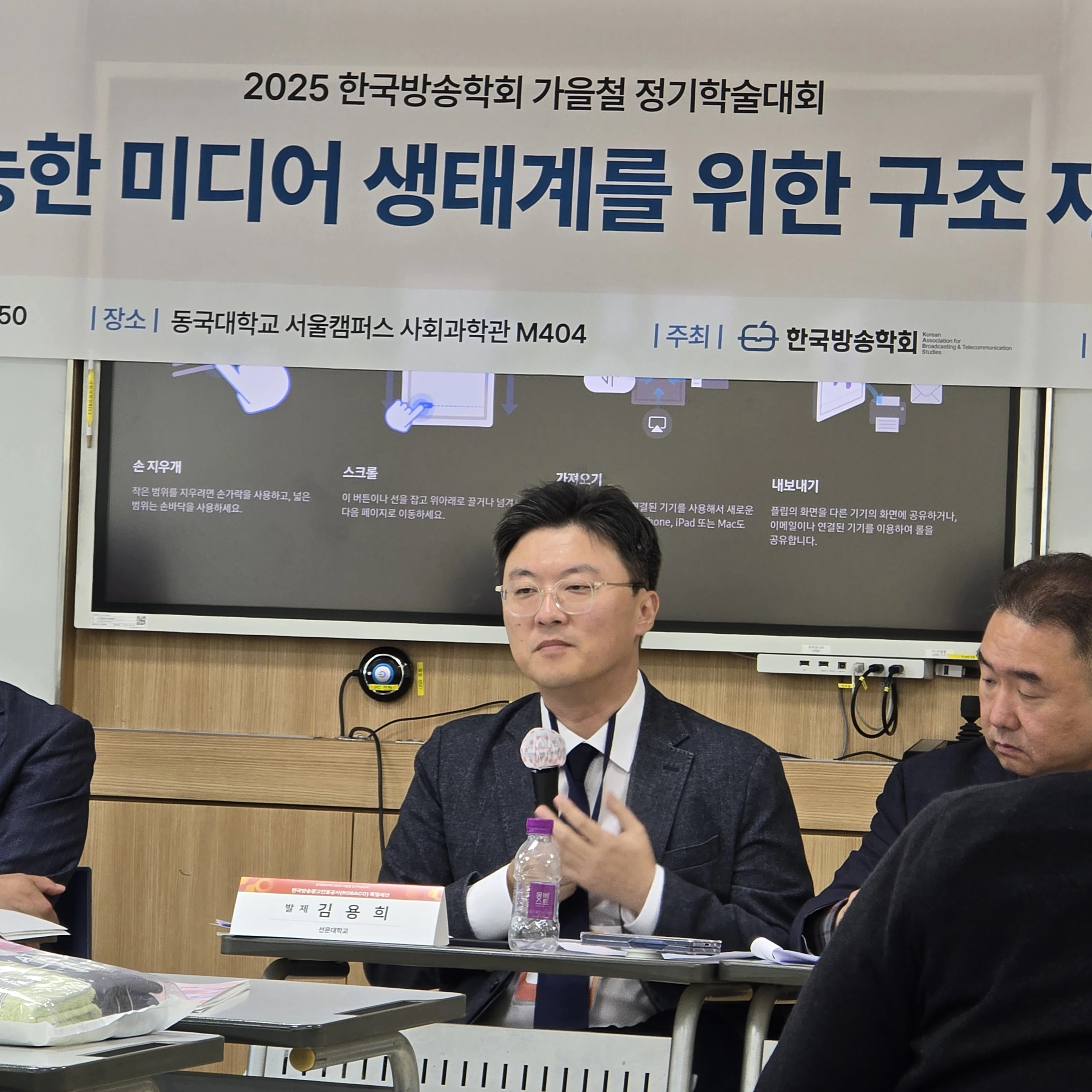
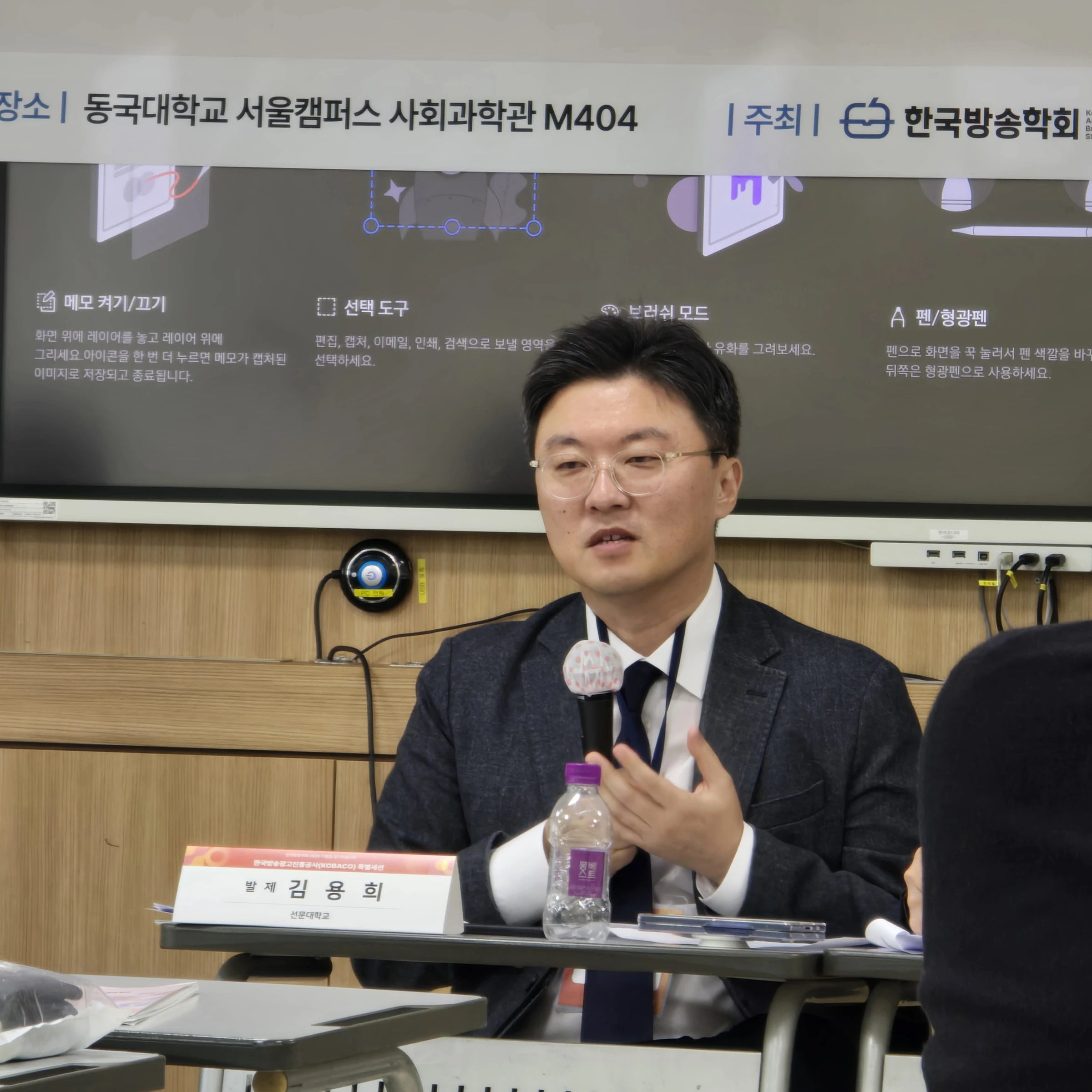
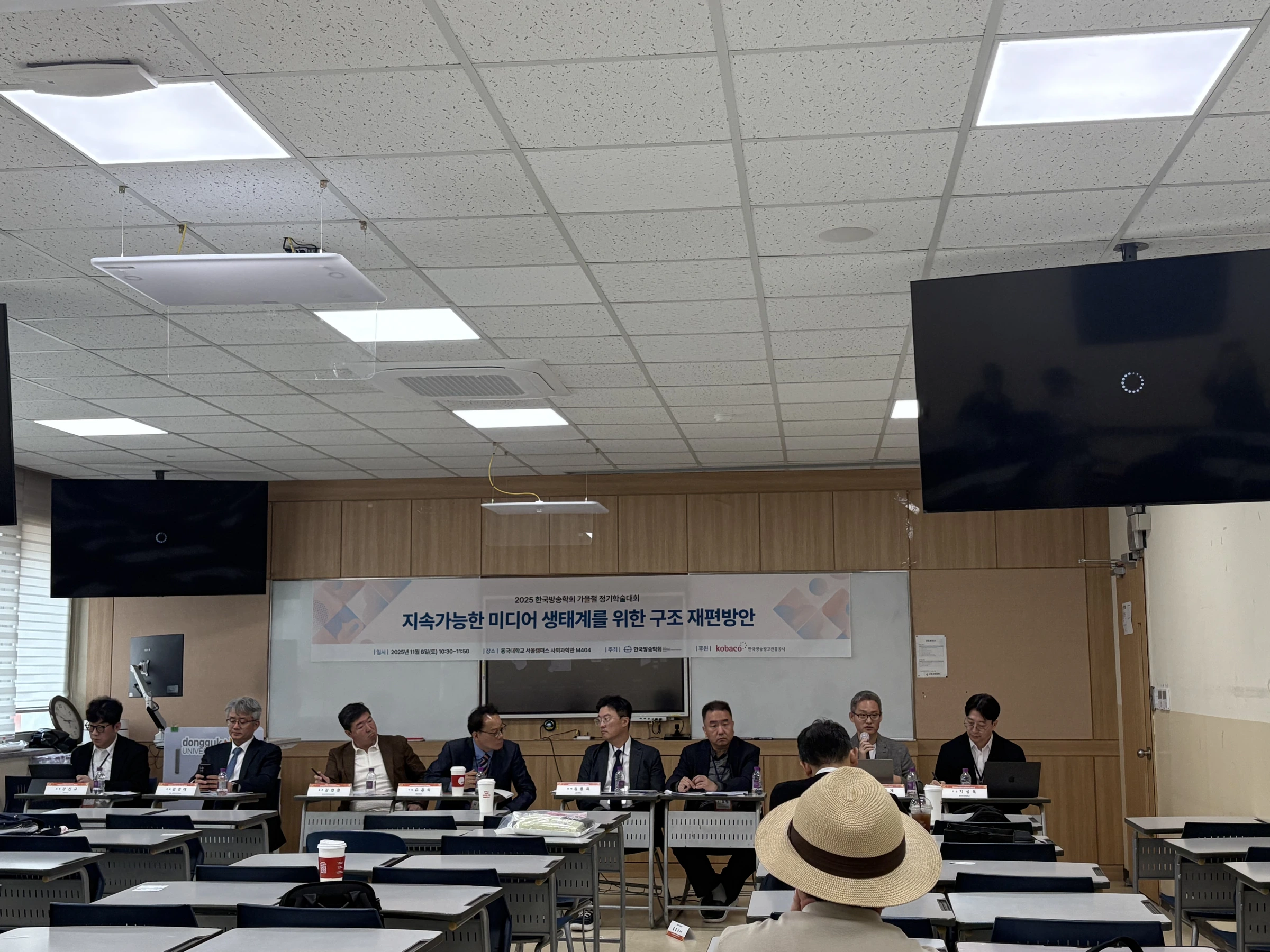
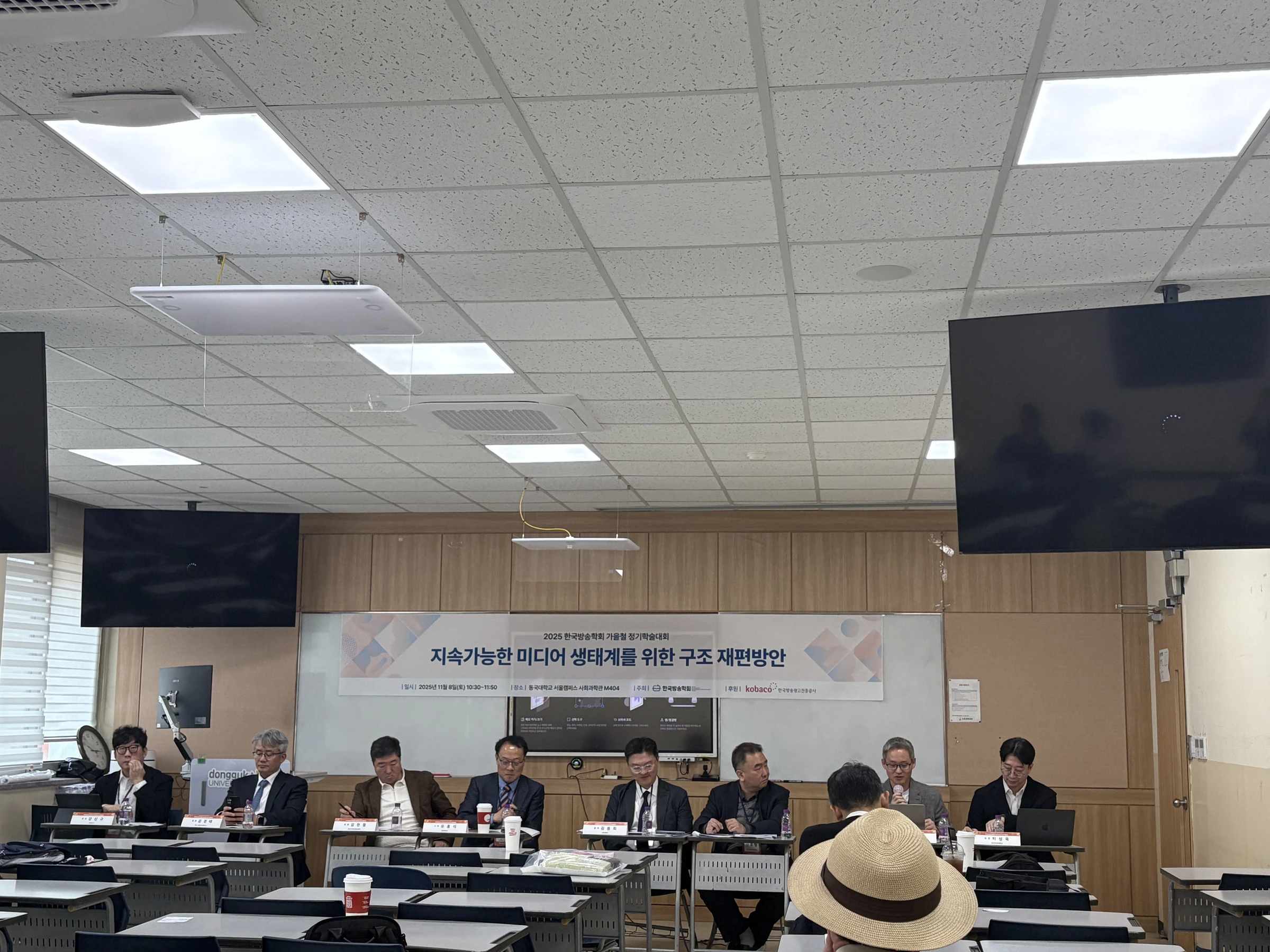
2025년 11월 8일, 동국대학교에서 열린 한국방송학회 가을철 정기학술대회 KOBACO 특별세션에서 「지속가능한 미디어 생태계를 위한 정부재원 구조 재편방안」을 발제했습니다. 행사와 발제자는 한국방송학회 공개 자료집의 프로그램 2쪽에서 확인할 수 있습니다.
발표에서 다룬 구분
자료집은 2015–2024년 방송매출 증가율을 18.9%, 발표에서 정의한 산업 외부의 순유입 재원 증가율을 0.1%로 제시합니다(자료집 PDF 4–5쪽). 두 지표의 범위가 다르다는 점이 논의의 출발점입니다.
여기서 순유입은 유료수신료·광고매출·수신료 등 산업 외부에서 들어오는 재원을 발표자가 묶어 계산한 개념입니다. 0.1%를 물가로 조정한 실질매출 성장률로 해석해서는 안 됩니다. 이 지표만으로 특정 규제가 산업 부진의 원인이라는 인과관계가 입증되는 것도 아닙니다.
당시의 정책 제안
발표에서는 공영방송 수신료, 방송광고 규제, 방송통신발전기금의 역할을 함께 검토할 필요가 있다는 의견을 제시했습니다. 이는 발표 시점의 정책 제안이며, 시행 중인 제도의 효과를 확정한 결과와 구분해야 합니다.
당시 발표자료 읽기 · 한국방송학회 · 관련 연구 기록
매출의 합계와 산업에 새로 들어오는 돈을 구분
발표의 질문은 방송매출의 합계가 늘었다는 사실만으로 제작과 공익 콘텐츠의 기반이 튼튼해졌다고 말할 수 있는가였습니다. 외부에서 들어오는 재원과 산업 내부에서 이동하는 거래를 나누면, 총량의 성장과 실제 재원 여건을 따로 볼 수 있습니다. 다만 사업자·연도별 분류와 회계 범위를 확인하면서 읽어야 합니다.
광고·수신료·기금·거래 구조를 함께 설계
제안은 여러 재원을 하나의 체계로 살피는 것이었습니다. 광고에서는 유형과 방식의 규제를 정리하고 새로운 판매·타기팅 방식이 가능한 여건을 검토했습니다. 공영방송 재원에서는 거버넌스의 개편과 함께 예측 가능한 재정 운영을 논의해야 한다고 봤습니다. 방송통신발전기금에서는 사업자의 부담과 공적서비스 투입을 함께 고려하는 유인 구조를 제안했습니다.
플랫폼과 채널 사이의 콘텐츠 사용료·송출 거래도 중요한 축입니다. 산정 기준과 거래의 투명성, 채널 구성·운영의 자율성, 제도 변경의 예측 가능한 시점을 함께 검토할 과제로 제시했습니다. 거래 구조가 불투명하면 사업자 사이의 불신을 줄이기 어렵고, 투자와 편성 계획에도 불확실성이 남기 때문입니다.
정책 제안의 읽는 법
자료집의 관찰 지표, 추정모형, 재정 시나리오는 근거의 성격이 서로 다릅니다. 추정계수는 특정 제도를 바꿨을 때 그대로 실현될 효과가 아니며, 수신료·감면 시나리오도 가정과 제도 설계에 따라 달라집니다. 발표의 주요 제안은 재원 하나를 늘리는 데서 그치지 않고 제작 기반과 공익 책무를 뒷받침하는 연결 구조를 논의하자는 것이었습니다.
발표·토론 현장 사진 더 보기
Presentation and source
On November 8, 2025, I presented “Restructuring Government Financing for a Sustainable Media Ecosystem” in the KOBACO special session of the KABTS Fall Conference at Dongguk University. The event and speaker are listed on PDF page 2 of the official conference materials.
A distinction in the presentation
The slides report 18.9% growth in broadcasting revenue between 2015 and 2024 and 0.1% growth in the presentation’s measure of external net inflow (PDF pages 4–5). These measures cover different financial flows.
External net inflow groups sources entering the industry from outside, including subscription and advertising revenues. The 0.1% figure is not an inflation-adjusted revenue growth rate. This descriptive comparison also does not establish that a particular regulation caused industry performance.
Policy proposals at the time
The presentation argued for considering public-service broadcasting fees, advertising regulation, and the broadcasting development fund together. These were policy proposals, distinct from demonstrated effects of an implemented reform.
Read the original presentation · KABTS · Related research record
Separate aggregate revenue from money entering the industry
The presentation asked whether rising aggregate broadcasting revenue necessarily indicates stronger foundations for production and public-interest content. Distinguishing resources entering from outside from transactions within the industry helps separate those questions. Categories and accounting boundaries still require checking across years and operator types.
Design advertising, public funding and transactions together
The proposals considered several connected sources. Advertising involved simpler rules and room for new sales and targeting models. Public-service funding required predictable financial arrangements alongside governance reform. Fund contributions raised the relationship between operator burdens, public-service spending and investment incentives.
Platform–channel transactions also matter: clearer content-payment and carriage terms, transparency, channel-operation autonomy and predictable timing of institutional changes can help firms plan investment and programming.
Reading the proposals
Observed indicators, model estimates and fiscal scenarios have different evidential status. A coefficient is not a guaranteed policy effect, and a funding scenario depends on assumptions and implementation. The central proposal was a connected financing structure supporting production and public-service obligations.
More photographs from the presentation and discussion